When you click the buy or sell button on your trading app, your order executes instantly. But you may notice that your shares don’t appear in your Demat account immediately, or when you sell, you don’t receive all your funds at once. This delay exists because of the stock settlement cycle, the backend mechanism that settles securities transactions by moving shares and funds between buyers and sellers.
If you have ever thought, ‘When will my shares reflect? When can I sell? Why are payouts partial?’
Here’s a simple look at India’s T+1 settlement cycle.
Also Read: A Simple Guide to Chart Patterns, Candlesticks, Time Frames.
What Is Clearing and Settlement in the Securities Transactions Market?
Clearing and settlement is the two-way process that handles the actual transfer of securities and funds after a trade is executed. When you buy shares, your broker does not directly hand them to you. Instead, multiple entities work together to complete the transaction in the secondary market:
- Your brokerage firm handles your order.
- The stock exchange (NSE or BSE) matches buyers with sellers on the trading day.
- The clearing corporation (NSCCL or ICCL) ensures smooth settling of trades, handling pay-in and pay-out obligations.
- The depository and your DP manage your Demat account.
- The counterparty is the seller on the other side of your trade.
India follows a T+1 settlement cycle, making it one of the fastest settling securities markets globally. Under this system, settlement occurs one day after the transaction date, ensuring market efficiency, reduced settlement risk, and faster access to funds or securities for retail investors.
Also Read: Which Global Indices Affect Indian Market
Buying Shares: Full Timeline of the T Day to T+1 Settlement Date Cycle
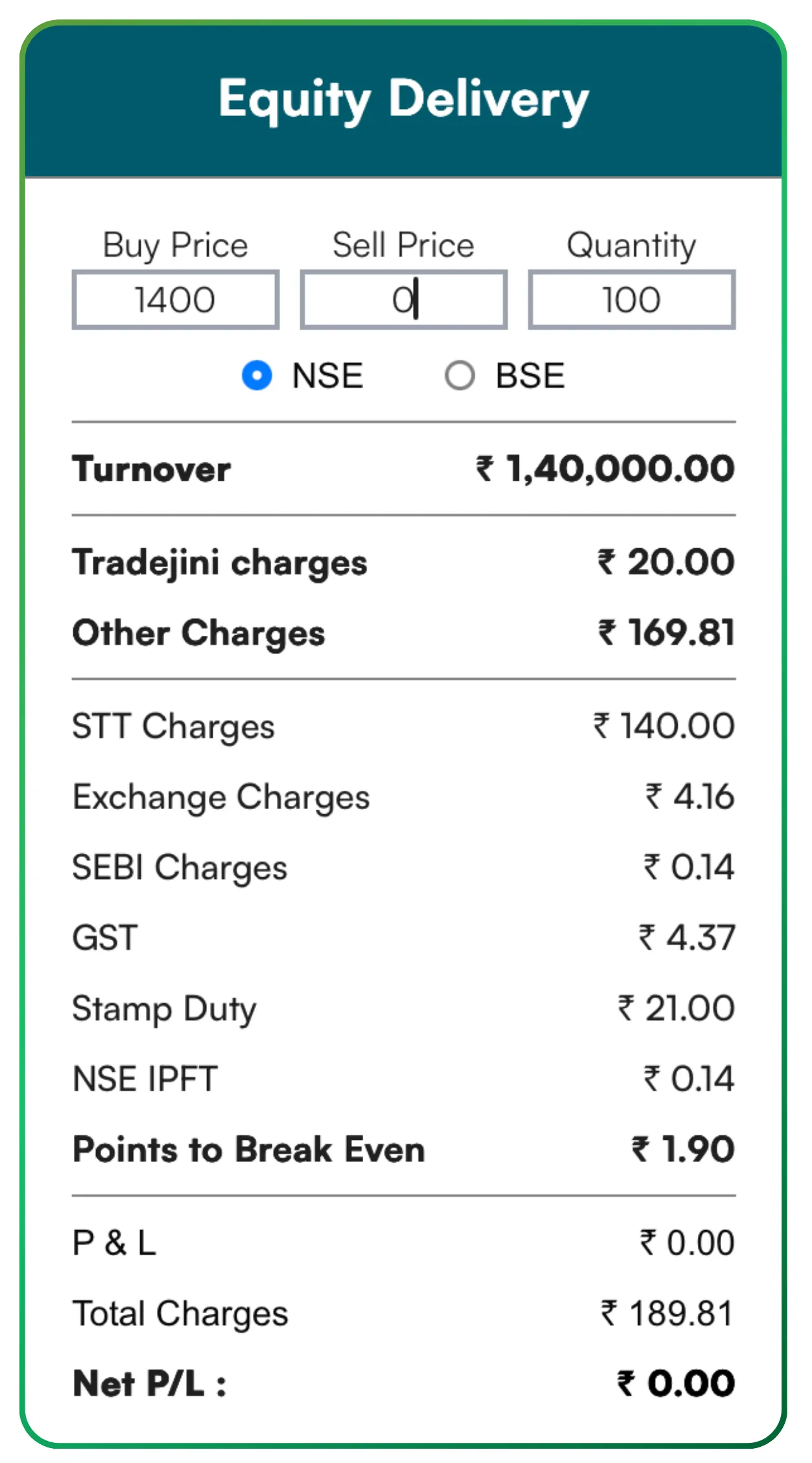
To understand the trade settlement timeline, consider this example: You buy 100 shares of Reliance Industries at ₹1,400 per share on Monday, for a total of ₹1,40,000.
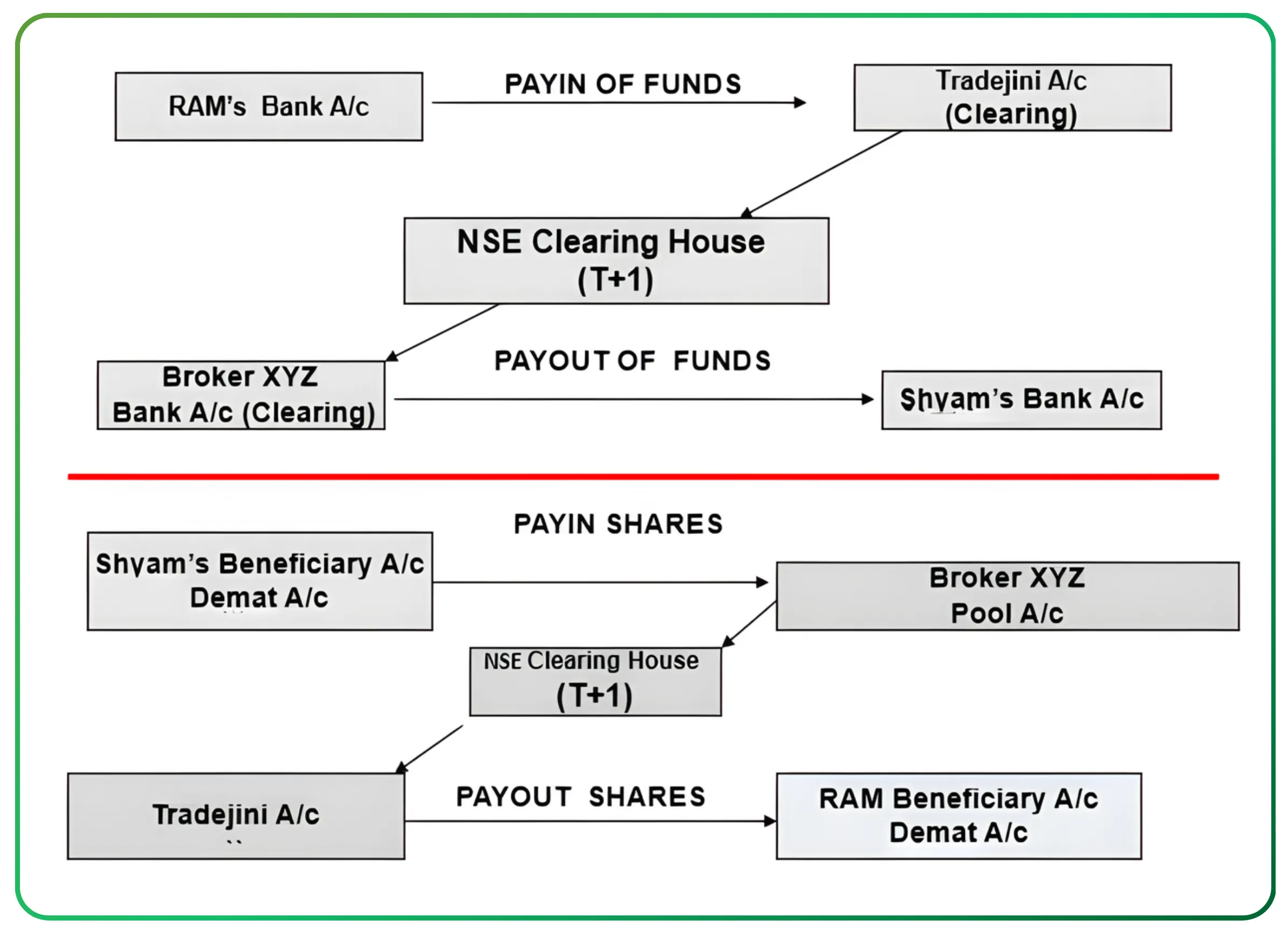
T Day (Trade Date): Monday, Order Execution and Fund Blocking
Order Execution and Funds Pay-In Obligation
Once your buy order is placed, your broker verifies funds and executes the transaction. The required amount (₹1,40,000 plus charges) is blocked in your trading account. This amount is earmarked for securities transactions but still shows in your account balance.
Charges Applied on Trade Day
Charges applicable on the transaction date include:
- Brokerage: Rs 20 for delivery-based stock trading
- Security Transaction Tax (STT): 0.1% = ₹140
- Exchange transaction charges: 0.00345% = ₹4.16 (approximation)
- SEBI charges: ₹0.14
- GST on charges: ₹4.37
- Stamp duty: 0.015% = ₹21
- NSE IPFT charges = ₹0.14
Total = ₹189.81 Your final funds pay-in obligation = ₹1,40,189.81
Contract Note
Your broker issues a contract note, the official record of the trade, useful for taxes and audits.
Shares Are Still Not in Your Account
Though your order is executed on the trading day, the shares are still in the settlement pipeline. They have not yet been credited to your Demat account.
T+1 Settlement Day (Next Business Day): Tuesday, Clearing Corporation and Final Delivery
How Clearing Members Move Securities
The clearing corporation
- Debits funds from your broker’s pool account.
- Credits the selling broker.
- Moves the 100 Reliance shares from the seller’s Demat account to yours.
- By the end of T+1, the buyer receives the securities, now visible in your Demat account. You can then hold them, pledge them, or sell them.
Selling Shares: How Settlement Works in Reverse
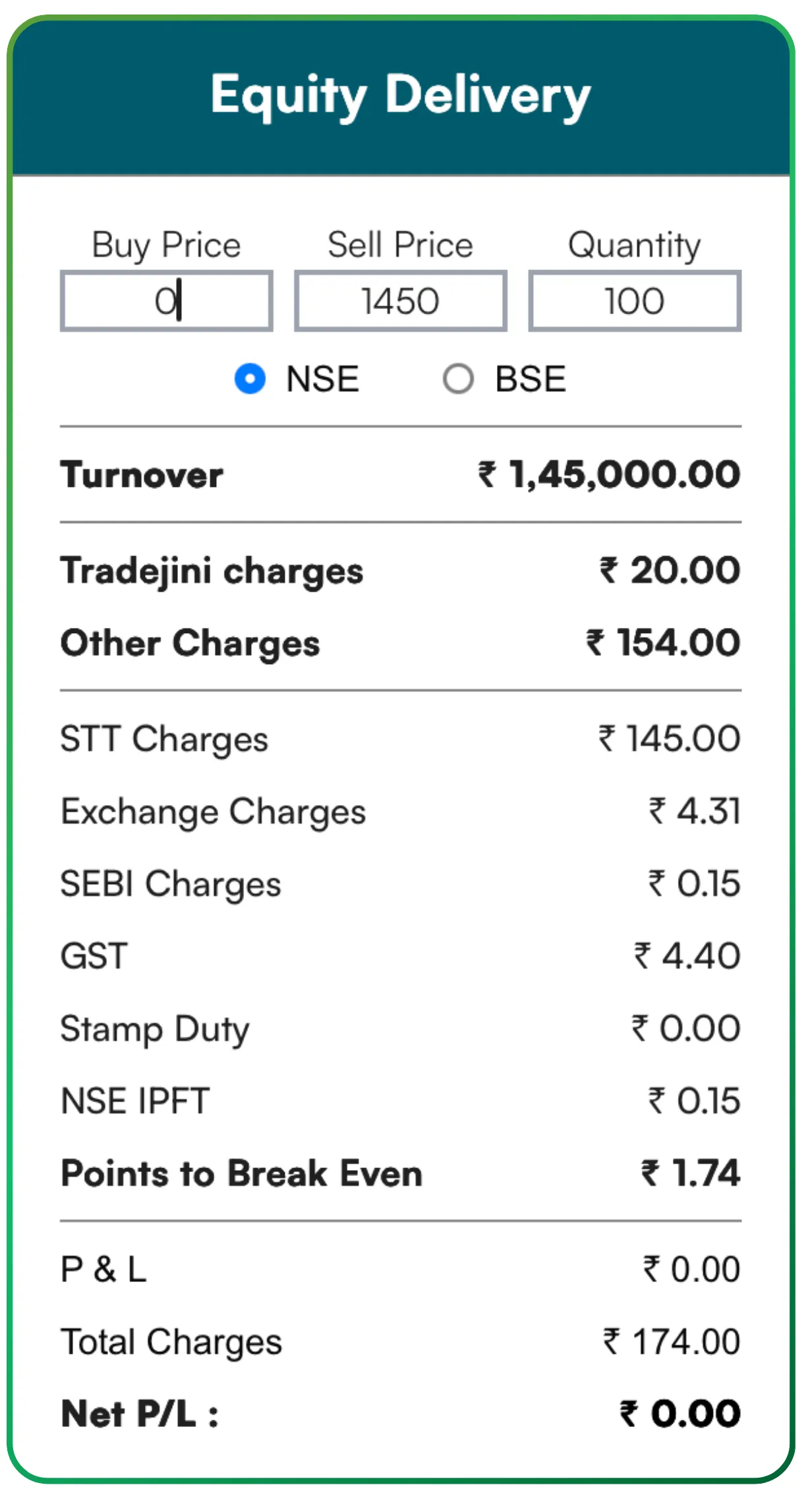
Now suppose you sell the 100 Reliance shares on Wednesday at ₹1,450 per share.
T Day (Wednesday): Sale Execution and Share Blocking
Share Blocking in Your Demat Account
Once you place the sell order:
- Your 100 shares are blocked (earmarked) in your Demat account.
- You cannot reuse or resell them.
- You still see them in holdings, but with a blocked/earmarked status.
Charges and Net Sale Value
Gross sale: ₹1,45,000 Deductions include:
- STT: ₹145
- Brokerage: ₹20
- Exchange charges: ₹4.31
- SEBI fees: ₹0.15
- GST on charges: ₹4.40
- NSE IPFT charges: ₹0.15
Net proceeds ≈ ₹1,44,826
T+1 (Thursday): Share Debit
On the settlement date your 100 Reliance shares are debited and delivered to the buyer via the clearing corporation.
Your full sale value is now free for withdrawal.
Also Read: Stock Market Index Explained
Understanding Earmarking: A Key Retail Investor Protection Mechanism against Bad Delivery
Earmarking, introduced by SEBI in 2022, safeguards clients from broker misuse.
Earlier, sold shares were moved to the broker’s pool account immediately. This led to misuse in scandals such as Karvy, where client securities were rehypothecated without consent.
Under the new rule:
- Shares remain in your Demat account until settlement day.
- They are only earmarked for delivery.
- The broker never controls your securities.
This significantly reduces settlement risk, enhances market transparency, and protects retail investors.
Special Trading Scenarios in the Settlement Cycle
Intraday Trading (Same Day Settlement)
In intraday trades:
- You buy and sell within the same trading day.
- No actual delivery of securities occurs.
- Only the profit or loss difference settles.
Charges differ: Brokerage ~0.03%, STT = 0.025%.
BTST (Buy Today, Sell Tomorrow) and Settlement Risk
BTST allows selling shares before they are credited to your Demat account. This is effectively selling on a future date while still awaiting custodial confirmation from the clearing members.
Risks include:
- If your buy-side settlement fails, your BTST sale also fails.
- This can lead to penalties or auction (bad delivery scenarios).
Only liquid stocks are permitted for BTST.
Dividend Eligibility and the Settlement Date in the equity segment
You must hold shares in your Demat account before the ex-dividend date to receive dividends.
- Buy One day before Record-date → shares settle on T+1 → dividend eligible.
The clearing and settlement framework is the system that keeps financial markets stable, transparent, and fair, ensuring every investor receives the right securities and payments on time.
Disclaimer: The information provided in our blogs is for informational purposes only and should not be construed as financial, investment, or trading advice. Trading and investing in the securities market carries risk. Always conduct your own research and consult with a qualified financial advisor before making any investment decisions. Past performance is not indicative of future results. Copyrighted and original content for your trading and investing needs.
© 2025 — Tradejini. All Rights Reserved.
.webp%3Falt%3Dmedia%26token%3D0ead9799-20bc-4d1e-ae8f-d75ab18921b5&w=3840&q=75)