

Every investor faces this big question at some point. Should you let a fund manager actively pick stocks for you or simply follow the index and go passive? It’s not just about choosing an investing style; it’s about what truly fits you, your goals, your time horizon, and your comfort with risk. In India’s rapidly growing mutual fund market, both active and passive options are thriving, each catering to different kinds of investors.
Understanding active investing
Active investing is built around one core idea that is outperforming the market. Fund managers carefully study companies, economic trends, and valuations before deciding which stocks to buy or sell. The aim is to generate returns higher than a benchmark index such as the Nifty 50 etc.
This strategy attracts investors who are comfortable taking measured risks for higher potential gains. It involves higher costs because of research and frequent portfolio adjustments, but it also provides flexibility to take advantage of market movements. However, for the investor who wants to surpass the benchmark index, active investing enables investors to modify their portfolios in response to market conditions. But it necessitates a thorough comprehension of market trends, constant observation, and a readiness to accept greater risks in exchange for possibly bigger profits.
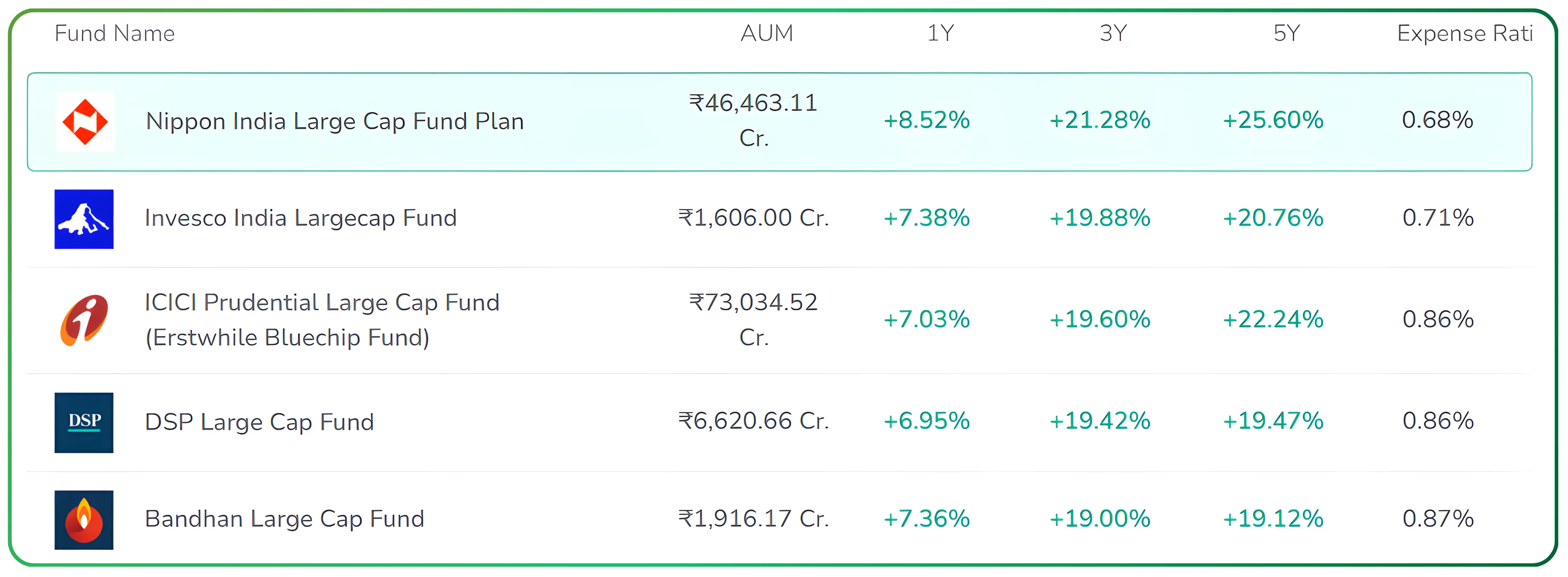
Recent data shows that active funds have managed to deliver strong results in several categories. For instance, over a three-year period, large-cap active funds have generated annual returns of around 19–21%, compared with about 12% for the Nifty 50 index. This indicates that active managers continue to create value, especially in markets where information gaps still exist.
CubePlus has made peer scheme comparison effortless, as shown below, investors can easily compare the performance of leading active funds across 1-year, 3-year, and 5-year periods, making informed decision-making simpler and investing truly streamlined.
The rise of passive investing
Passive investing has steadily become a preferred route for many investors. Instead of trying to beat the market, it aims to replicate its performance through index funds and exchange-traded funds (ETFs). The focus here is on discipline, low cost, and long-term consistency.
This approach eliminates the need for frequent trading and reduces expenses that can eat into returns. It is ideal for investors who want steady market-linked growth without spending time on constant portfolio tracking.
Passive fund assets grew 0.2% on-month to Rs 12.50 lakh crore.The category registered net inflows for the 58 th consecutive month, totalling Rs 11,437 crore as of August 2025. India’s passive mutual fund segment has grown rapidly in recent years.This growth reflects increasing investor awareness, digital access, and cost-consciousness.
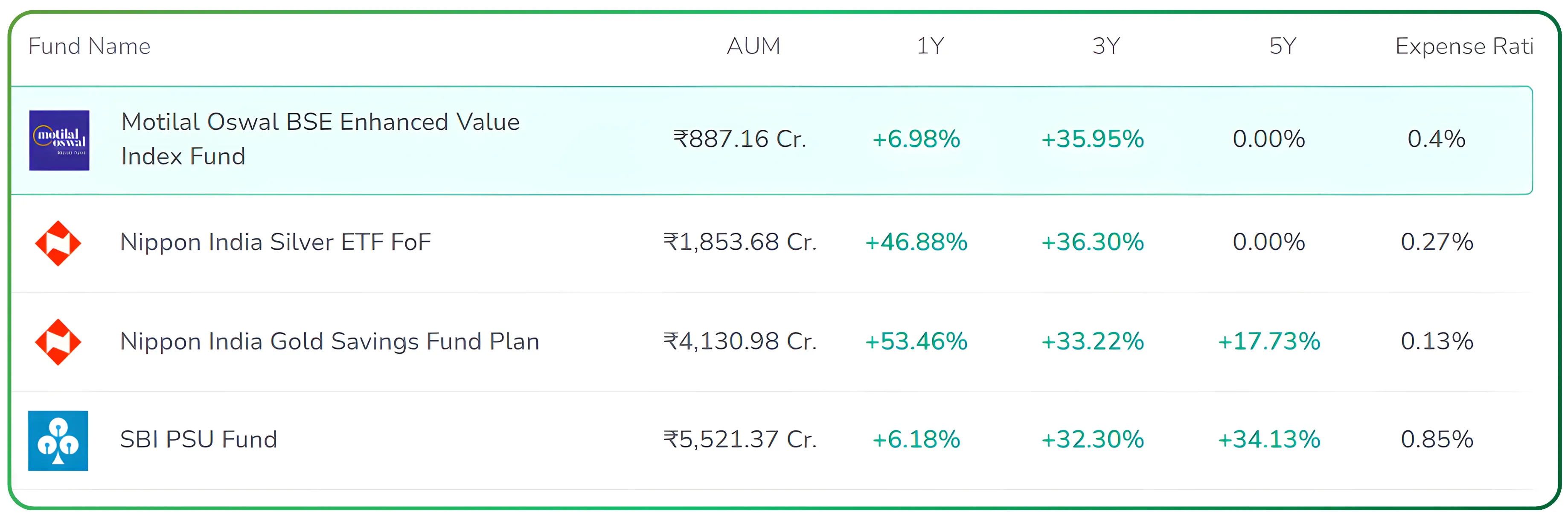
Similarly, CubePlus also simplifies passive fund comparison, allowing investors to easily analyse and compare different index and ETF options, just like with active funds making portfolio selection more efficient and transparent.
Balancing client interest and commissions
Many mutual fund distributors (MFDs) still hesitate to recommend passive funds because the commissions are lower, creating a clear mutual fund commission passive active gap in investor guidance. A balanced mix of active and passive funds helps build both wealth and trust over time. Passive funds have delivered impressive long-term results, and ignoring them purely for higher commissions would be short-sighted.
Interestingly, many investors now prefer passive funds because of lower costs, often after watching social media videos. Investors should not focus only on cost. Performance and consistency matter more. If an active fund charges a bit more but consistently beats its benchmark, it’s worth paying for. Choosing only by expense ratio can hurt long-term returns.
And for investors using CubePlus, then you don’t have to worry about the commission part at all. The platform allows you to easily compare, analyse, and recommend both active and passive funds on merit by ensuring transparency.
Blending Both for Smarter Investing
Rather than viewing active vs passive Investing India as competing strategies, investors can use them together to build stronger portfolios. Comparisons such as Nifty 50 Index Fund vs Active Fund show that both approaches have merit depending on goals and risk appetite. Active funds can help investors tap opportunities in sectors like manufacturing, infrastructure, or small-caps where fund manager alpha generation plays an important role. In contrast, passive funds such as Index Funds vs ETFs India provide a stable and low-cost foundation through index-based exposure.
A balanced mix might include 60 to 70% in active funds and 30 to 40 % in passive options for moderate investors. Conservative investors can keep a higher share in passive funds for stability, while aggressive investors may tilt toward active strategies to seek alpha. Overall, blending active and passive strategy supports long-term wealth creation.
Why the smart money lies in balance, not bias
Both active and passive investing have a place in a well-diversified portfolio. Active funds offer the potential to outperform during market cycles, while passive funds bring cost efficiency and steady growth. In an environment shaped by shifting FII and DII flows, evolving SEBI norms, and rising financial awareness, the most successful investors are likely to be those who combine both strategies thoughtfully. The future of investment in India lies not in choosing one over the other, but in balancing the two to build sustainable long-term wealth.
Also read : Tradejini User Guide
Disclaimer: The information provided in our blogs is for informational purposes only and should not be construed as financial, investment, or trading advice. Trading and investing in the securities market carries risk. Always conduct your own research and consult with a qualified financial advisor before making any investment decisions. Past performance is not indicative of future results. Copyrighted and original content for your trading and investing needs.
© 2025 — Tradejini. All Rights Reserved.


