

Finance Minister Nirmala Sitharaman tabled a ₹53.5 lakh crore Union budget on February 1, 2026 and the headline isn't just ‘more money.’ It's about where that money goes and how the government is finally trying to get private players to chip in too.
So, How Big Is This Budget?
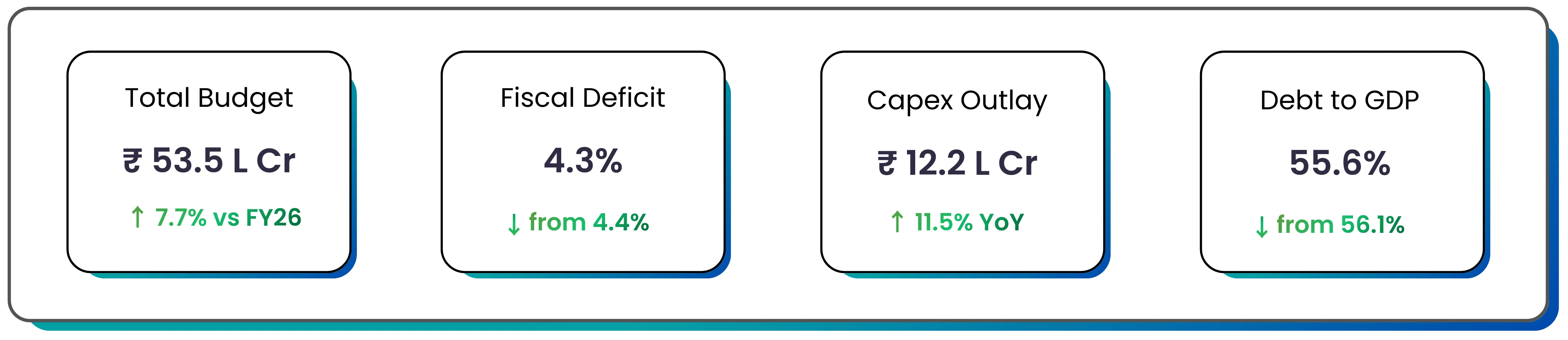
Total spending is up to ₹53.5 lakh crore a solid jump from ₹49.65 lakh crore last year. But here's the interesting bit: despite spending more, the government is actually reducing the fiscal deficit. That's because tax collections are healthier, and the economy is estimated to grow at 10% in nominal terms this year.
Infrastructure
Capital Spending Is Up
Capital expenditure has jumped to ₹12.2 lakh crore, an 11.5% increase. Last year's budget was mostly about spending big. This year? It's about spending smart.
Infrastructure Risk Guarantee Fund: The government will now partially guarantee loans to private builders during the risky construction phase. Translation: fewer projects get stuck, more private money flows in.
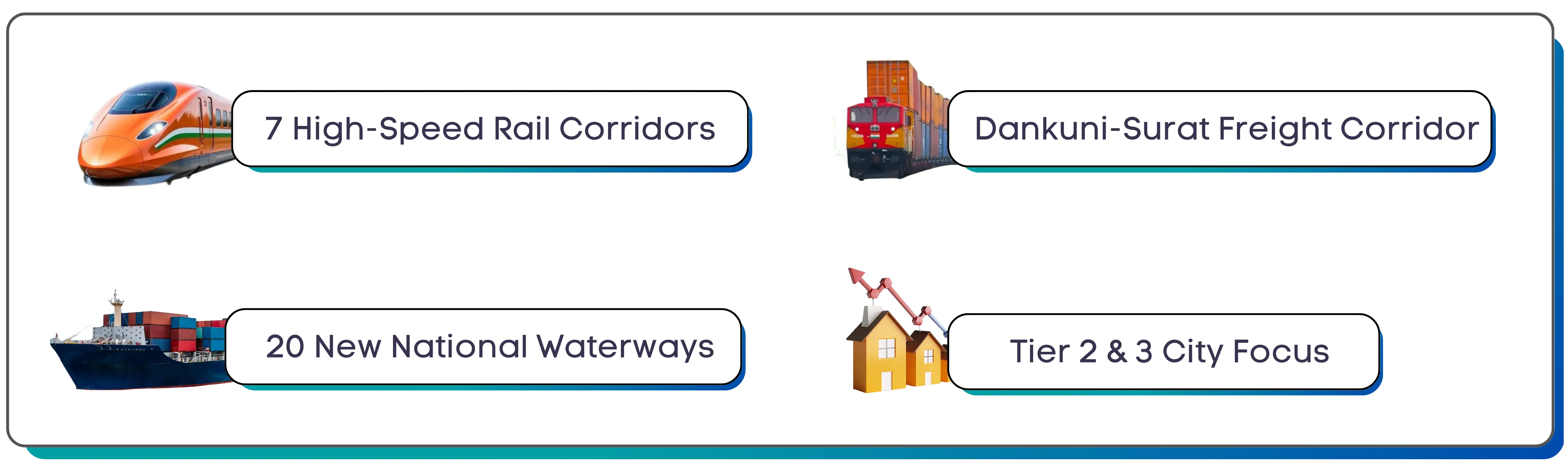
Beyond that, the budget announced 7 high-speed rail corridors: Mumbai–Pune, Pune–Hyderabad, Hyderabad–Bengaluru, Hyderabad–Chennai, Chennai–Bengaluru, Delhi–Varanasi, and Varanasi–Siliguri. There's also a brand new east–west freight corridor from Dankuni to Surat, and 20 new National Waterways to be opened over five years.
Manufacturing
Last year was about building factories. This year, the budget is focused on building entire ecosystems… the components, the materials, the skills. Here's what stands out:
| Scheme | What’s Happening | Money |
|---|---|---|
| Electronics Components (ECMS) | Outlay more than doubled Support for component-level manufacturing |
₹40,000 Cr |
| Semiconductor Mission 2.0 | Scope expanded beyond chips Covers equipment, materials, IP, and skilled talent |
₹1,000 Cr (BE) |
| Biopharma SHAKTI | India’s push to become a global biopharma hub Biologics, biosimilars, clinical trials focus |
₹10,000 Cr / 5 yrs |
| Chemical Parks | 3 new parks across states Challenge-based funding model |
₹600 Cr (BE) |
| Rare Earth Corridors | Dedicated corridors in Odisha, Kerala, Andhra Pradesh & Tamil Nadu |
— |
| Legacy Industrial Clusters | 200 old clusters to be revived Better infra and technology support |
— |
Why does it matter? India has long talked about ‘Make in India.’ This budget actually starts connecting the dots, from raw materials and rare earths right through to finished products. That's a supply chain strategy, not just a slogan.
Small Business
MSMEs are finally getting equity, not just loans…For years, the go-to support for small businesses was debt. This budget flips the script and that's a big deal.
₹10,000 Cr SME Growth Fund: A new equity fund designed to help high-potential MSMEs scale up without drowning in debt. Only ₹500 Cr is being released in FY27, but the intent is clear: nurture ‘champion’ enterprises.
On top of that, the Self-Reliant India Fund gets a ₹2,000 crore top-up for micro enterprises, and TReDS (the platform that helps MSMEs get paid faster) is now mandatory for all government companies buying from MSMEs. The government is also introducing securitisation of TReDS receivables, essentially creating a market where MSME invoices can be traded. Neat.
Also Read: Highlights of the economic survey 2026
Climate & Energy
Carbon Capture is finally getting real money…Here's a shift worth paying attention to. Until now, India's green strategy was almost entirely about building more solar and wind. But what about the steel plants? The cement kilns? The refineries?

This also happens to be strategically smart. The EU's Carbon Border Adjustment Mechanism (CBAM) is already penalising high-carbon exports. Indian steel and chemical exporters need this.
Your Taxes
No Slab Changes. But a few things did shift…. If you were hoping for lower income tax brackets, then relax nothing changed there. The big move is the New Income Tax Act, 2025, which kicks in on April 1, 2026. It's designed to simplify things, not change how much you pay.
A couple of wins for individuals though: TCS on overseas education and medical remittances has been cut from 5% to 2%. If you're sending money abroad for studies or treatment, that's real savings.
Now, the one that will ruffle feathers in trading circles, STT on derivatives has changed:
| What | Old Rate | New Rate |
|---|---|---|
| Futures | 0.02% | 0.05% |
| Options (Premium) | 0.10% | 0.15% |
| Options (Exercise) | 0.125% | 0.15% |

Winners & Losers
Who Gains? Who Should Watch Out?
| Sector | Key Budget Signal |
|---|---|
| Infra & EPC | Capex at ₹12.2 lakh crore; Risk Guarantee Fund |
| Railways & Logistics | High-speed rail, freight corridor, waterways push |
| Biopharma | SHAKTI scheme launched (₹10,000 crore, 5 years) |
| Green Tech / CCUS | Carbon capture receives direct budget support |
| Specialty Chemicals | New chemical parks; rare earth corridors |
| Brokers & Traders | Higher STT on futures and options |
| Textiles | Mega parks and export-linked support |
| Middle Class (Income Tax) | No change in tax slabs |
| Bond Markets | Fiscal consolidation supports debt outlook |
| Tourism & Sports | Skilling, sports manufacturing and Khelo India focus |
Government Borrowing
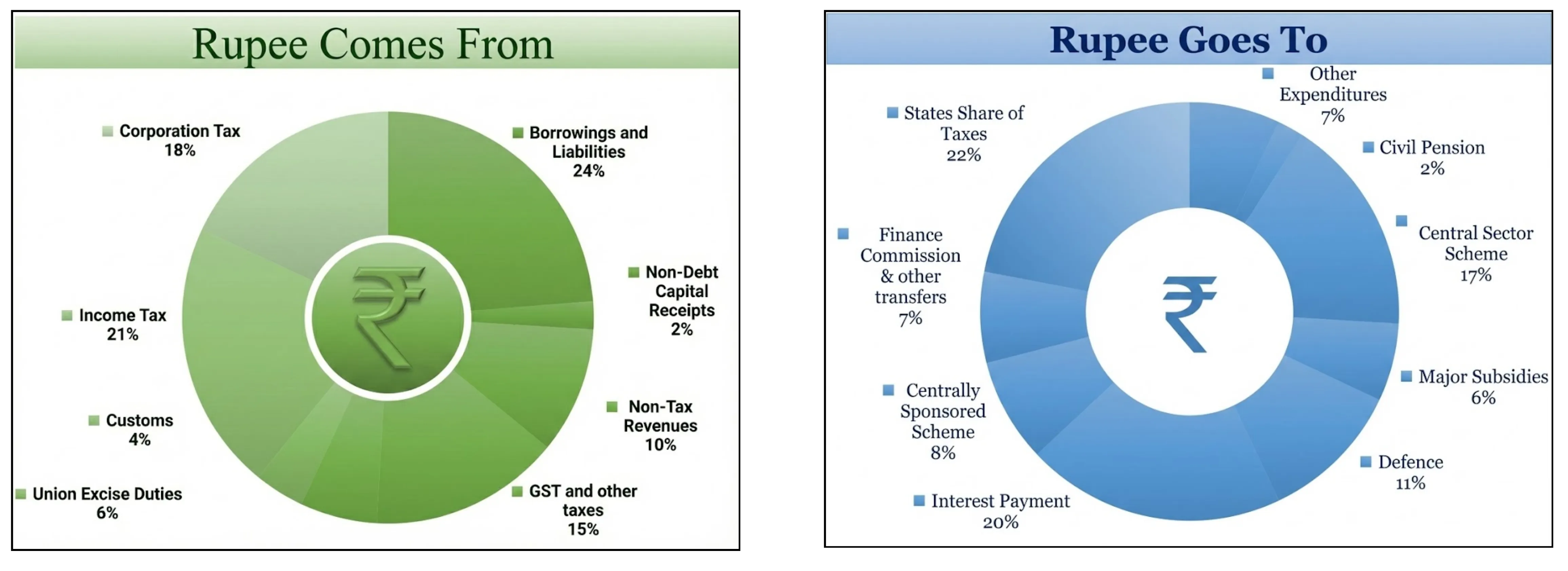
Gross market borrowing for FY27 is set at ₹17.2 lakh crore, up from ₹14.6 lakh crore last year. Net borrowing after repayments comes to ₹11.7 lakh crore. The rest comes from small savings and other sources.
The good news? Even with higher borrowing, the debt-to-GDP ratio is actually falling from 56.1% to 55.6%. That's fiscal discipline in action.
‘Overall, the 90-minute Budget 2026–27 presentation concluded with a clear message of policy continuity and calibrated reform.’
Disclaimer: The information provided in our blogs is for informational purposes only and should not be construed as financial, investment, or trading advice. Trading and investing in the securities market carries risk. Always conduct your own research and consult with a qualified financial advisor before making any investment decisions. Past performance is not indicative of future results. Copyrighted and original content for your trading and investing needs.
© 2026 — Tradejini. All Rights Reserved.