Control Print operates in a niche that is rarely noticed, yet its work touches almost every packaged product we consume. The company manufactures machines that print essential information such as expiry dates, batch numbers, QR codes, and barcodes on products across FMCG, pharma, food, beverages, pipes, cables, steel, plywood, and dozens of other industrial categories. If you look at any bottle, biscuit packet, wire coil, plywood sheet or medicine strip, the printed text is almost always produced by a coding and marking machine. Control Print is the only Indian manufacturer in a market historically dominated by global giants, and it has built an 18–20% domestic market share supported by an installed base of over 21,500 machines.
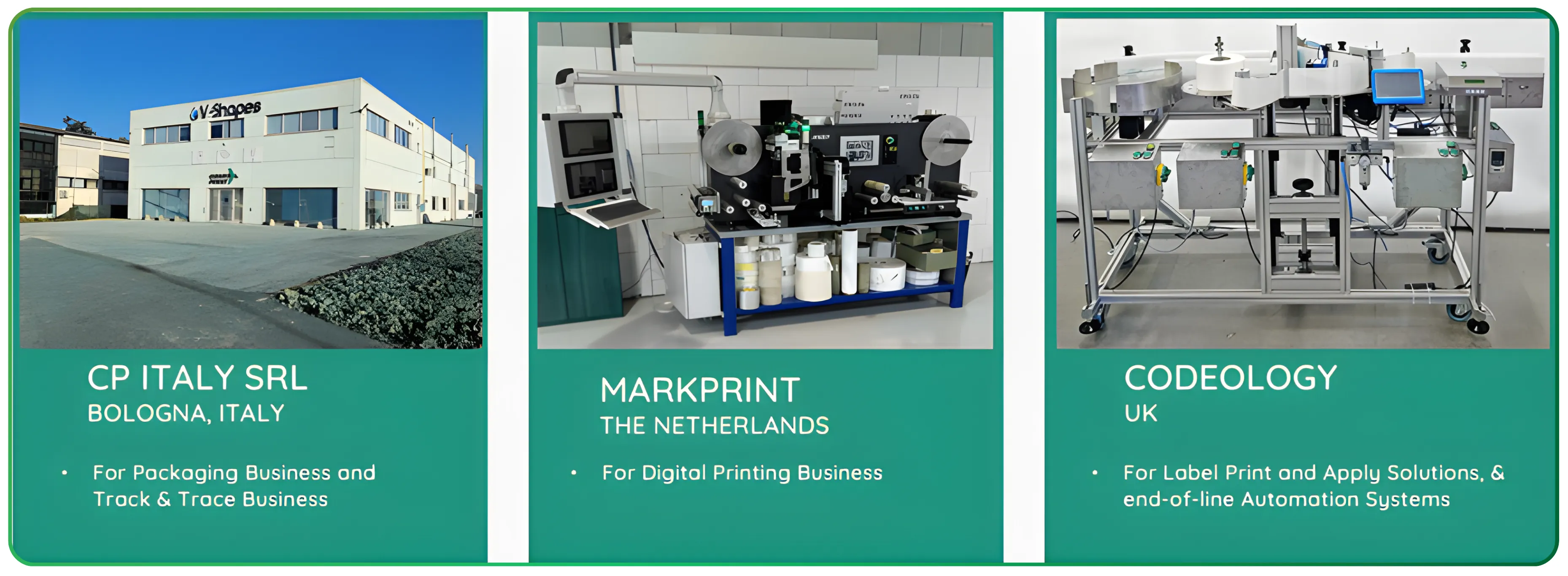
Over time, the company has expanded beyond basic coding and marking into three additional areas. The first is Track & Trace technology, which enables product authentication and end-to-end supply-chain visibility using QR codes. The second is packaging, through its V-Shapes acquisition in Italy, which manufactures single-serve sachet machines and laminates. The third is a growing international footprint through Markprint (Netherlands) and Codeology (UK), which adds complementary digital printers, end-of-line automation systems, and label application technologies. Together, these create a broader ecosystem: machines, consumables, software, and packaging, allowing the company to participate in multiple parts of the product-identification value chain.
An Insight into Business Model
The core of the business is simple: industries need reliable, high-speed printing systems to mark their products, and once these machines are installed, they consume ink and solvents every single day. Control Print earns a smaller one-time margin from selling the printers but enjoys high recurring margins from consumables, spare parts, and service contracts. This “razor and blade” model gives the company predictable, sticky cash flows. Notably, Control Print is the only Indian manufacturer that produces coding equipment and is recognized for its advanced coding equipment offerings.
The Track & Trace division extends this model by embedding QR-based identification into products. Two of India’s largest pharma companies are currently piloting this system, and if adopted at scale, it could create annuity-like revenue from software, maintenance, and consumables. The company also offers non contact type coding solutions, leveraging drop-on-demand inkjet printing technology for high-speed, precise, and contactless marking applications.

In the packaging vertical, V-Shapes focuses on single-dose sachet technology used for products such as honey, shilajit, cosmetics, nutraceuticals and food pastes. The most strategic feature of this business is that V-Shapes machines are electronically locked, meaning users must purchase laminates from Control Print. This creates a second recurring revenue stream similar to the consumables model in coding and marking.
Also read: Q2 FY26 Performance Review of Entero, Senores, Acutaas, Alkem and Laurus
Company Overview
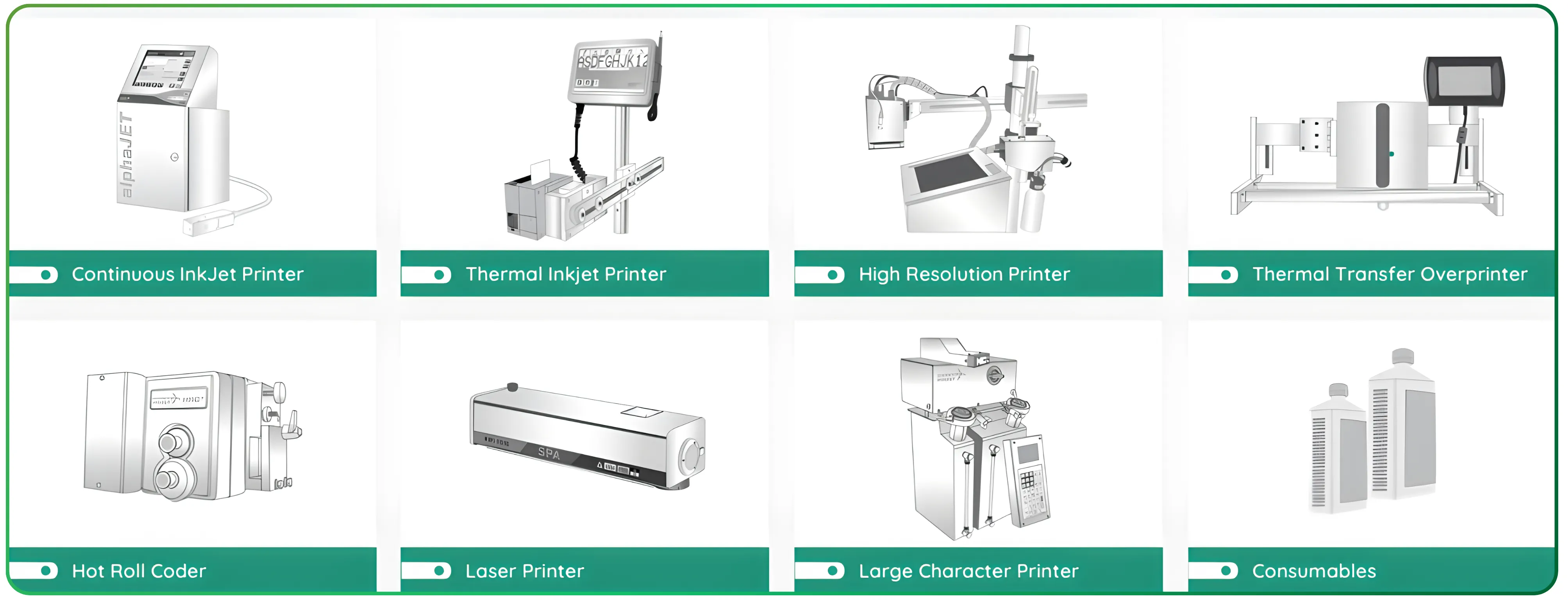
Control Print Limited stands as a trailblazer in the Indian coding and marking solutions industry. Established on January 14, 1991, by Basant Kabra and Anirudh Joshi, Control Print Ltd has grown into the only Indian integrated manufacturer capable of competing with global technology leaders. The company’s comprehensive product portfolio includes Continuous Ink Jet Printers, Drop on Demand Printers, Hot Roll Coders, Thermal Inkjet Printers, Thermal Transfer Over Printers, lasers, and a full suite of consumables. This wide range allows Control Print India Limited to address the diverse and evolving needs of Indian manufacturers across sectors.
A key differentiator for Control Print Ltd is its highly integrated ERP system, which underpins exceptional operational excellence and ensures seamless process control from manufacturing to after-sales service. By leveraging advanced global technology while maintaining local manufacturing capabilities, Control Print Limited delivers reliable, cost-effective marking solutions tailored for the Indian market. The company’s market capitalization and share price reflect its strong position and consistent performance in the marking solutions industry, making it a closely watched stock among investors seeking exposure to the information technology and process control equipment sectors.
Products and Services
Control Print Ltd offers one of the most comprehensive product portfolios in the marking solutions industry, positioning itself as the only Indian integrated manufacturer capable of competing with global technology leaders. The company produces a wide array of coding equipment, including Continuous Ink Jet Printers, Drop on Demand Printers, Hot Roll Coders, Thermal Inkjet Printers, and Thermal Transfer Over Printers. These advanced systems are designed to print variable information, such as batch numbers, expiry dates, maximum retail price, and QR codes, on a diverse range of products and packaging.
Control Print’s solutions cater to industries like food and beverage, pharmaceuticals, cosmetics, and more, ensuring compliance with regulatory requirements and enhancing traceability. The company’s hot roll coders and thermal inkjet printers are particularly valued for their reliability and efficiency in high-speed production environments. As an Indian integrated manufacturer, Control Print Ltd not only produces coding equipment but also develops and supplies the consumables required for ongoing operations, offering end-to-end marking solutions that meet the evolving needs of Indian and global manufacturers.
Also read: A Performance Review of Gravita India, VA Tech Wabag, and Deep Industries
Business Segments and Revenue Contribution
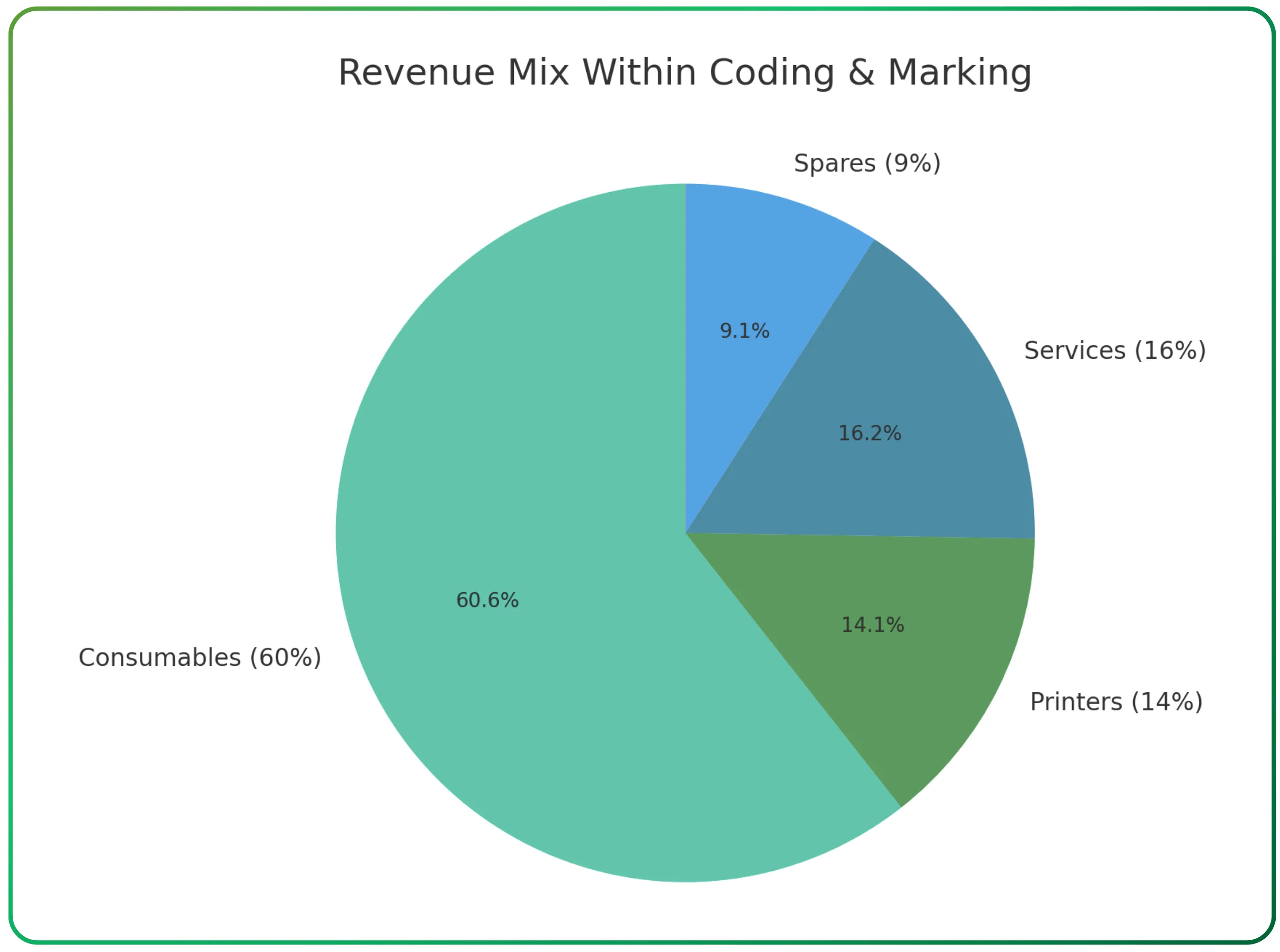
Coding and marking remains the dominant segment and contributes roughly 90–95% of consolidated revenue. Within this segment, consumables account for about 60% of revenue, while printers contribute roughly 14%, services around 16%, and spares close to 9%. This mix highlights why the company maintains strong gross margins of nearly 60%; recurring consumables form the backbone of profitability. Net income is a key indicator of the company's overall financial health and is closely monitored by investors.
The international businesses (Markprint and Codeology) add digital printing and automation capabilities and are already profitable at the subsidiary level. The packaging business, through V-Shapes in Italy and India, is still in an investment phase, with the Italian entity expected to break even in FY27.
Geographical Presence and Revenue Breakup
Control Print’s operations are still overwhelmingly centred in India, but the company has built a meaningful international footprint over the last three years. The domestic business is driven through a network that covers more than 1,700 towns and 2,700 pin codes, supported by major manufacturing units in Nalagarh (Himachal Pradesh) and Guwahati (Assam). These two factories manufacture the entire range of coding and marking printers, inks, solvents, and select high-resolution systems for the Indian market.
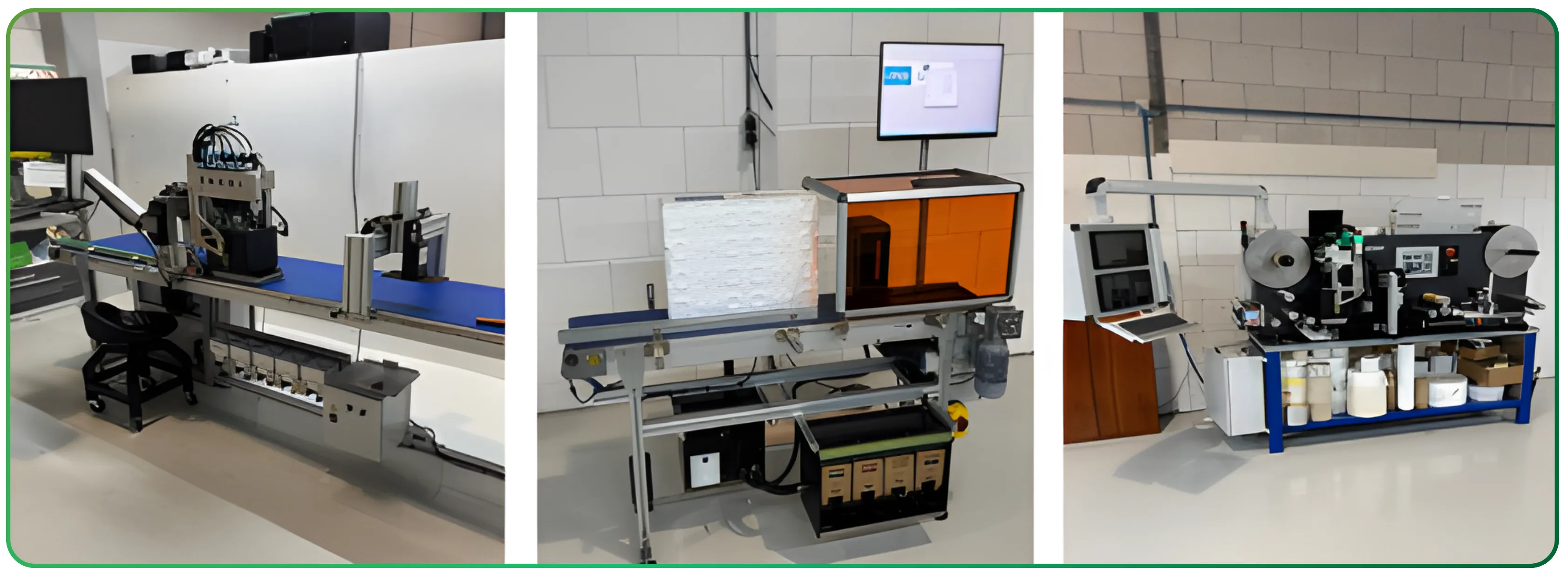
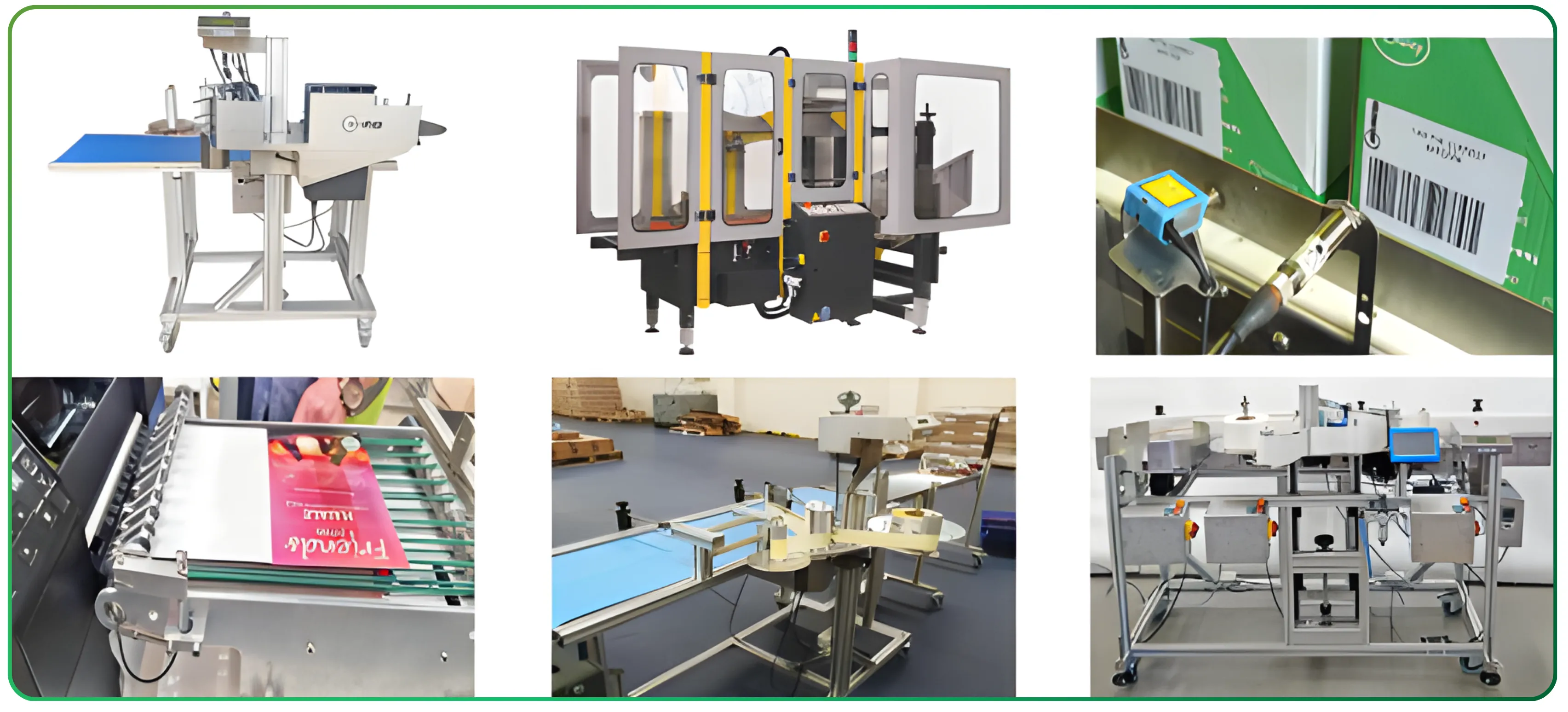
Image: Markprint in the Netherlands
Beyond India, the company now operates through a set of subsidiaries that broaden its reach across Europe and the Middle East. Markprint in the Netherlands focuses on high-resolution and CMYK digital printers, Codeology in the United Kingdom manages label-print-and-apply systems and end-of-line automation, while CP Italy handles the V-Shapes single-serve packaging business. A new subsidiary in the UAE has been created to target the Middle East and Africa, allowing Control Print to sell both Indian-made products and European-label offerings into these markets. This combination gives the company a presence across India, Europe (Italy, Netherlands, UK), and the Middle East.
When we look at revenue contribution, India continues to account for the vast majority of the business. In H1 FY26, the consolidated revenue stood at ₹223 crore and Overseas operations contributed roughly ₹21 crore during the same period, or about 9–10% of total revenue. Most of the international contribution comes from Markprint and Codeology, as the Italy business is still in a loss-making but transitioning phase.
Control Print is still an India-first company, with domestic operations representing around 90% of the consolidated topline. However, the presence of profitable subsidiaries in the UK and Netherlands, combined with the long-term growth potential in Europe and the Middle East for V-Shapes and Track & Trace solutions, hints that overseas contribution may gradually rise over the next three to five years.
If you're tracking India’s industrial expansion across multiple sectors, we also recommend reading our marine industry report: India’s Maritime Economy — Complete Sector Analysis (Part 1/3).
Financial Performance and Revenue Growth
Consolidated Financials – H1 FY26
| ₹ crore | H1 FY26 | H1 FY25 | YoY (%) |
|---|---|---|---|
| Operating Revenue | 223.3 | 199.6 | 11.8 |
| Gross Profit | 133.7 | 120.2 | 11.2 |
| EBITDA | 44.5 | 40.7 | 9.4 |
| PAT | 27.2 | 25.1 | 8.0 |
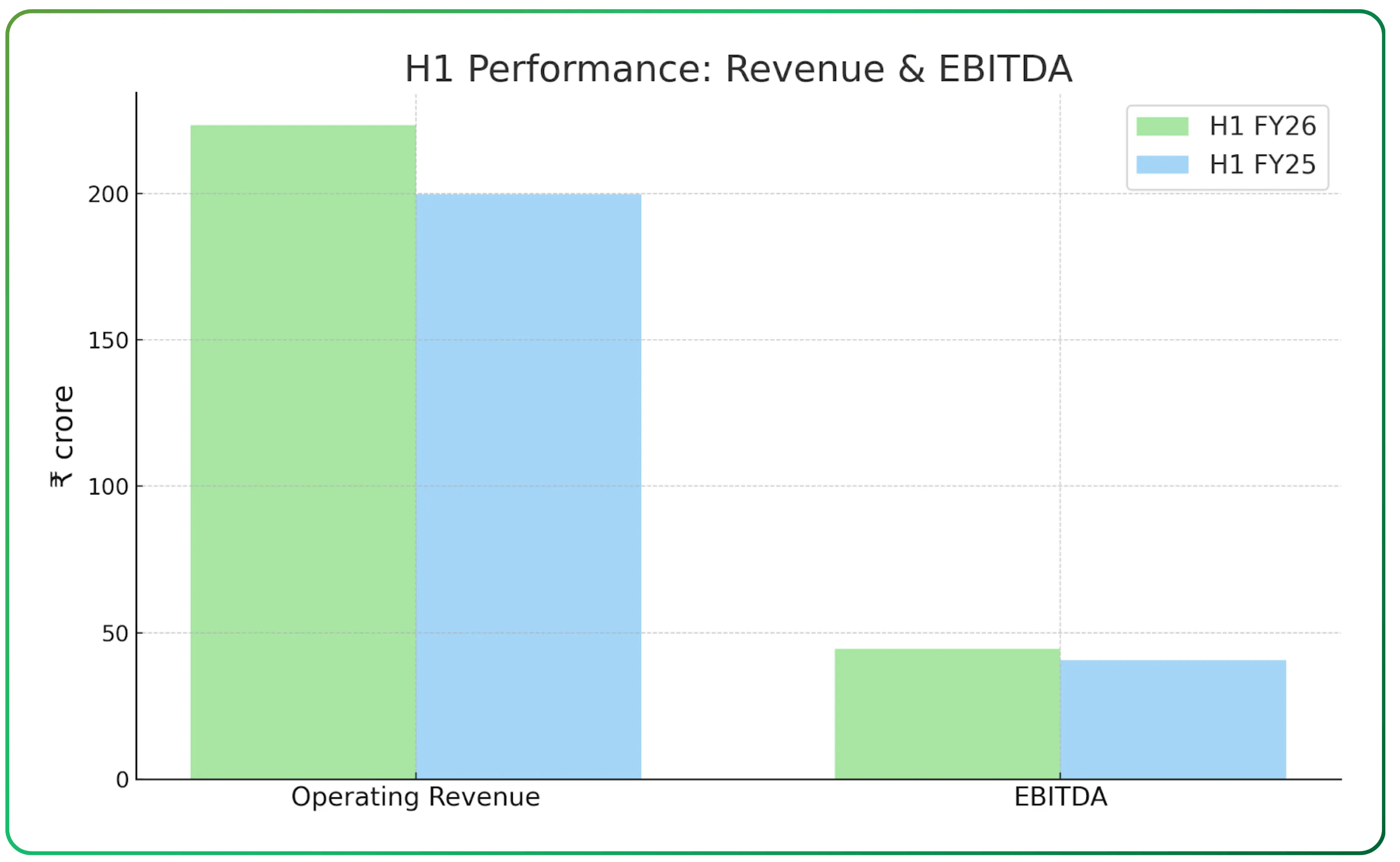
Consolidated results remain subdued due to continuing losses in Italy. However, the profitable performance of Markprint and Codeology offsets part of this drag. Management expects Italy’s losses to moderate in the second half and decline significantly in FY27.
Long-Term Track Record (Consolidated)
On a consolidated basis, revenue grew at roughly 20% CAGR between FY21 and FY25. Gross profit followed a similar trajectory and remained in a tight 58–60% band, reflecting the strength of Control Print’s consumables-heavy business model. EBITDA grew at around 13% CAGR, although the FY25 EBITDA margin compressed due to losses and R&D spending at the Italian subsidiary. PAT expanded sharply, rising at a 34% CAGR, supported by core business strength and one-time exceptional gains in FY25.
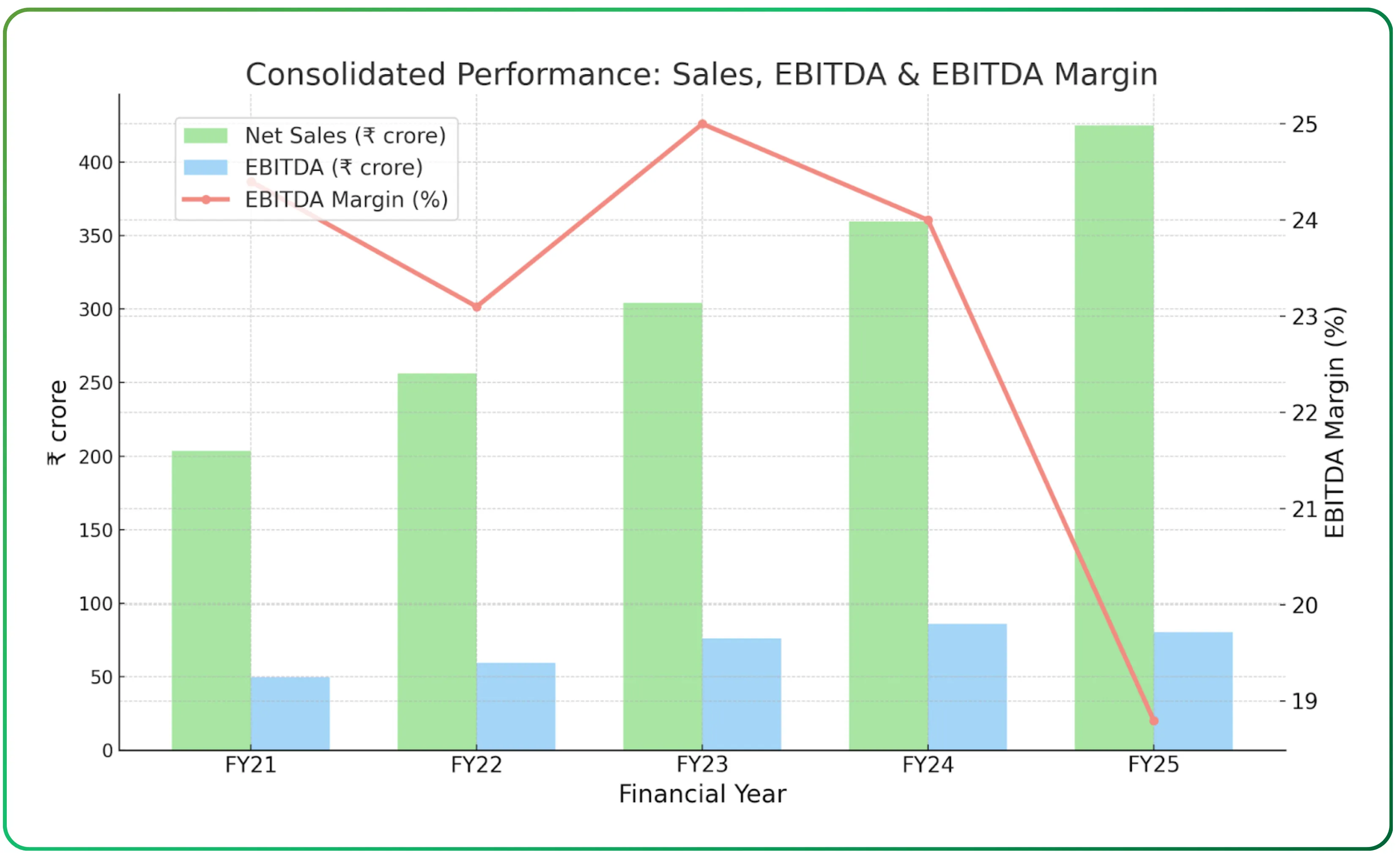
Net income, which reflects the company's total profit after all expenses and taxes, is a crucial metric for evaluating Control Print's overall financial health.
The company has scaled consistently, absorbed international acquisitions without destabilising its core profitability, and maintained a fundamentally strong margin profile despite new business investments.
Also read: Is Action Construction Equipment Rising to Become India’s Biggest Equipment Powerhouse?
Balance Sheet Strength and Cash Flow Position
Control Print’s balance sheet is one of its greatest strengths. The company carries virtually no debt, with a debt-to-equity ratio of just 0.02 on a standalone basis. Its current ratio of nearly 4 indicates ample short-term liquidity, and both ROCE (18.5%) and ROE (26.9%) remain strong.
Working-capital efficiency has improved materially over the years. Inventory days have reduced from more than 500 days historically to about 224 days, and the cash conversion cycle has fallen to roughly 240 days. The company also holds significant investments and cash equivalents across standalone and consolidated books, giving it flexibility to fund acquisitions, R&D, and the V-Shapes turnaround without external borrowing.
The cash flow record over the past decade shows consistent cash generation from operations. Capex requirements in the core coding and marking segment are modest, and management has confirmed that there is no major capex planned for the next one to two years.
Industry Landscape
The global coding and marking industry is valued at approximately USD 8.6 billion in 2025 and is expected to reach nearly USD 11.8 billion by 2030, driven by rising packaged food consumption, increasing regulatory mandates, and expanding industrialisation in emerging markets. Asia-Pacific is the fastest-growing region, with strong demand from FMCG, pharmaceuticals, chemicals, construction materials, and automotive.
Control Print is often classified within the information technology sector due to its focus on electronic equipment and industrial automation.
In India, the coding and marking market is projected to grow at a CAGR of nearly 9% between FY25 and FY30, faster than global growth. The market is dominated by four large players, with Control Print being the only domestic manufacturer. National programmes such as Make in India 2.0, PMKSY, the Automotive Mission Plan, and growing investments in FMCG, food processing, healthcare, building materials, and e-commerce are expected to boost long-term demand.
Competitive Advantages
Control Print benefits from being the only Indian player with full manufacturing capabilities, which allows it to offer faster service, lower cost structures, and stronger customer reach compared to multinational competitors that rely heavily on imports. Its installed base of more than 21,500 printers creates a long-tail stream of consumable sales, which form the most profitable part of the business.
The company’s ecosystem has become broader in recent years. Track & Trace provides a high-value solution layered on top of traditional coding, while V-Shapes offers machine + laminate lock-ins similar to the consumables model. The expansion of Markprint and Codeology adds digital and automation capabilities that strengthen its global relevance. The debt-free balance sheet and steady cash flow generation further reinforce its competitive position.
If you’re following India’s manufacturing and capital goods story closely, you may also want to read our analysis of ACE: Is Action Construction Equipment Rising to Become India’s Biggest Equipment Powerhouse?
Key Risks
The biggest execution risk lies in the Italian subsidiary. The business is still loss-making, and delays in certifying recyclable laminates or converting customer trials into full orders could prolong losses. The Track & Trace division, while promising, depends on successful completion of pilots with large pharma companies; meaningful revenue will flow only after wider adoption. The end of the Guwahati GST incentive has removed an annual benefit of around ₹8.5 crore from FY26 onwards, which the company must offset through core growth. Finally, FX fluctuations and the natural growth ceiling of the Indian coding and marking market could limit upside if new initiatives do not scale.
Valuation and Market Capitalization
At the current market price of ₹752, the stock trades at roughly 12× trailing earnings. The latest Control Print share price is ₹752, and investors can access real-time updates to monitor price movements and make informed decisions. The market cap of Control Print Ltd is calculated by multiplying the current share price by the total number of outstanding shares, making it a key metric for evaluating the company's overall valuation. Management expects standalone PBT to comfortably cross ₹100 crore in FY26. However, it’s important to understand that this TTM EPS is temporarily inflated. The March 2025 quarter shows a ₹67 crore net profit, which included exceptional income and a deferred-tax credit that artificially boosted earnings. Because of that one exceptional quarter, the trailing EPS appears higher than what the company earns in a normal twelve-month period. Control Print share prices can fluctuate based on prevailing market conditions, so investors should consider these factors when evaluating the stock.
When considering valuation, investors often track the Control Print share for its historical performance and analytical insights.
The best way to value the company, therefore, is to use a normalised earnings base built from the most recent “clean” quarters of FY26. The consolidated quarterly PATs from June 2025 and September 2025 together add up to ₹28 crore. Annualising these two quarters gives a normalised FY26 PAT of approximately ₹56 crore, which reflects the company’s genuine operating performance without the one-time FY25 boost.
The table below uses this logic and builds three FY26 outcomes (conservative, base, and optimistic).
| Scenario | FY26 PAT (₹ cr) | FY26 EPS (₹) | Forward P/E at ₹752 |
|---|---|---|---|
| Conservative | 56 | 35.6 | 21.1× |
| Base Case | 62 | 39.5 | 19.0× |
| Bull Case | 72 | 45.8 | 16.4× |
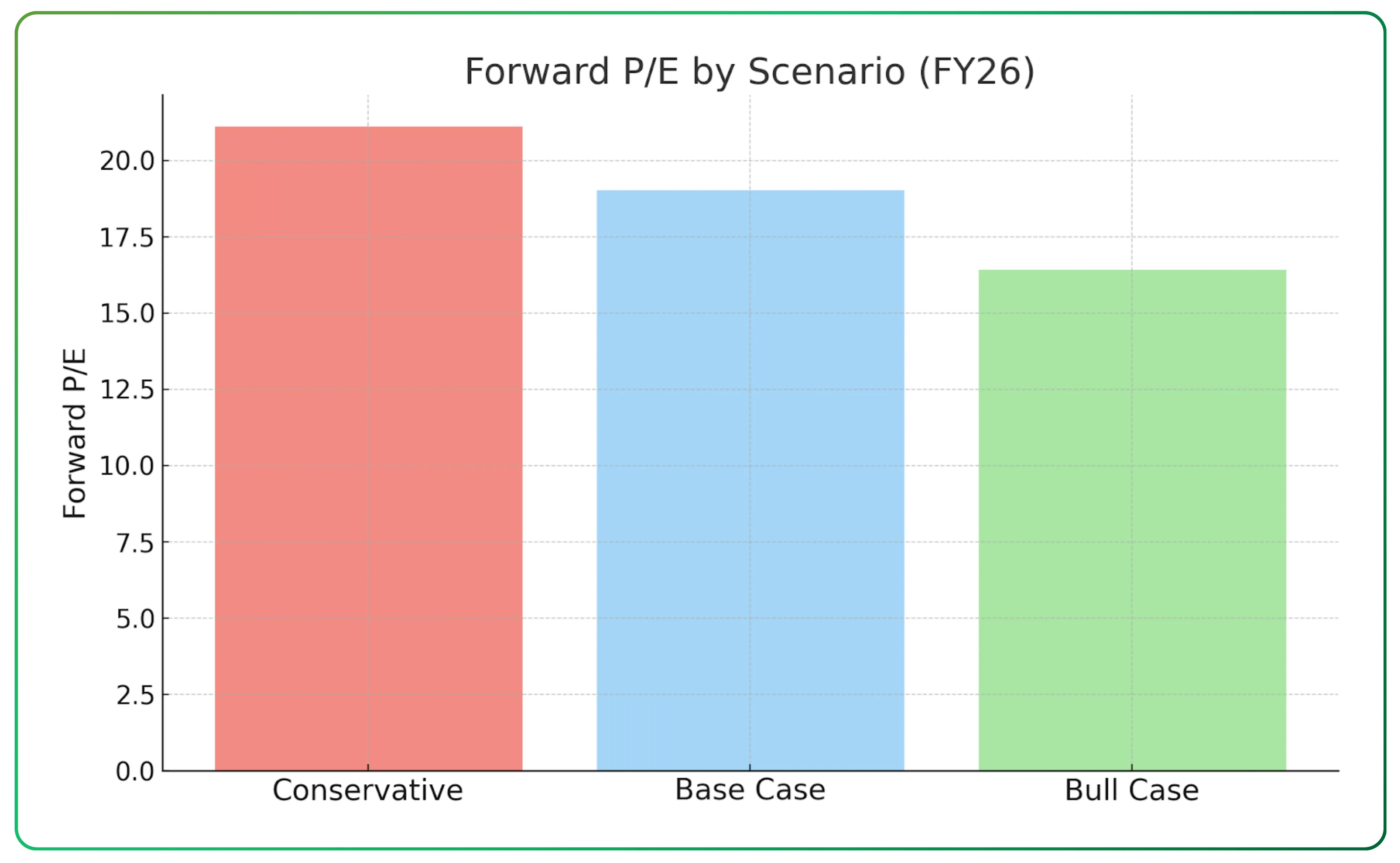
At 12× trailing earnings, Control Print appears attractively valued on the surface. But when normalised FY26 earnings are used (which exclude exceptional income) the forward P/E falls in the 16–21× range, depending on the level of improvement in the second half of FY26. This still represents a reasonable valuation for a company with a high-margin consumables engine, a clean balance sheet, and long-term optionality in Track & Trace and single-serve packaging.
Also read: Polymed’s Strategic Pivot to Global MedTech
Management Team
The leadership at Control Print Ltd is anchored by Chairman & Managing Director Basant S Kabra, whose vision and industry expertise have been instrumental in shaping the company’s growth trajectory. With over thirty years of experience, the management team brings a deep understanding of the marking solutions industry and the unique requirements of Indian manufacturers. Their commitment to exceptional operational excellence is evident in the deployment of a highly integrated ERP system, which streamlines processes from manufacturing to after-sales service.
Under this experienced leadership, Control Print Ltd has consistently driven revenue growth, expanded its product offerings, and reinforced its reputation as a leading provider of marking solutions. The management’s strategic focus on innovation, customer satisfaction, and operational efficiency continues to strengthen the company’s position in the market and supports its long-term objectives.
Research and Development
Innovation is at the heart of Control Print Ltd’s success in the marking solutions industry. The company operates a dedicated laboratory cum demonstration unit, where new products and technologies are rigorously tested and refined. This strong focus on research and development enables Control Print to stay ahead of industry trends and deliver cutting-edge marking solutions tailored to customer needs.
By investing in R&D, Control Print Ltd continually enhances the performance, reliability, and efficiency of its products, while also expanding its range to address emerging applications and industries. The company’s commitment to ongoing innovation not only supports its leadership position but also ensures that it can respond quickly to changing market demands and regulatory requirements.
Shareholding Pattern
As of September 2025, the shareholding pattern of Control Print Limited demonstrates a healthy mix of promoter confidence and broad-based investor participation. Promoters hold a commanding 52.98% stake in the company, underscoring their long-term commitment and belief in Control Print’s future performance. Retail investors and other individuals collectively own 43.35% of the shares, while foreign institutions account for 3.17%, and other domestic institutions hold 0.49%.
This diverse shareholding structure provides stability and reflects the trust placed in Control Print Ltd by a wide range of stakeholders. When combined with the company’s robust revenue growth, consistent dividend yield, and solid financial track record, the shareholding pattern supports a compelling investment case for those seeking exposure to a leading player in the marking solutions industry.
Corporate Governance
Control Print Ltd upholds the highest standards of corporate governance, ensuring transparency, accountability, and ethical conduct across all levels of the organization. The company has established robust internal controls and procedures to safeguard stakeholder interests and maintain operational integrity. The board of directors actively oversees the company’s strategic direction and compliance with best practices.
A key feature of Control Print Ltd’s governance framework is the anonymous portal facility, which allows employees and stakeholders to confidentially report concerns or grievances. This commitment to open communication and ethical management reinforces the company’s reputation for integrity and builds trust among investors, customers, and partners.
Sustainability
Control Print Limited is deeply committed to sustainability and environmental stewardship across its operations. The company prioritizes the development of energy-efficient coding and marking machines, such as thermal inkjet printers and hot roll coders, which help customers reduce their environmental footprint. By focusing on durable, reliable marking machines and adhering to stringent quality control standards, Control Print Ltd minimizes electronic waste and extends the lifecycle of its products.
This proactive approach to sustainability not only ensures compliance with regulatory requirements but also positions Control Print Limited as a responsible leader in the marking solutions industry. The company’s dedication to sustainable practices enhances its market value and strengthens its appeal among investors who prioritize environmental responsibility. As the demand for eco-friendly solutions grows, Control Print’s ongoing commitment to sustainability is expected to further bolster its reputation and long-term prospects in the market.
Dividend and Yield
Control Print Ltd has a strong track record of rewarding its shareholders through consistent dividend payments. The company’s dividend yield stands at 1.38%, offering investors a reliable income stream alongside the potential for capital appreciation. This competitive yield compares favorably with other companies in the same industry, making Control Print Ltd shares an attractive option for those seeking both growth and regular returns.
The company’s dividend policy is designed to balance shareholder interests with the need to reinvest in future growth, ensuring sustainable value creation over the long term. For investors looking to buy Control Print Ltd shares, the steady dividend yield adds an additional layer of appeal to the company’s robust financial and operational performance.
Final Perspective
Control Print is a company that combines a stable, recurring-revenue core with the optionality of new growth engines. The coding and marking business alone is strong enough to support steady growth, thanks to a large installed base, high consumable dependence, and a debt-free balance sheet. On top of this, Track & Trace and the V-Shapes packaging vertical offer meaningful long-term upside if execution remains on track.
The next 12–24 months will hinge on three markers: the success of pharma pilots in Track & Trace, the reduction of Italy losses and approval of recyclable laminates, and the company’s ability to continue expanding its installed base in India. If these unfold as planned, Control Print could transition from a steady industrial player into a broader product-identification ecosystem.
Turn research into action, and trade smarter on CubePlus
Disclaimer: The information provided in our blogs is for informational purposes only and should not be construed as financial, investment, or trading advice. Trading and investing in the securities market carries risk. Always conduct your own research and consult with a qualified financial advisor before making any investment decisions. Past performance is not indicative of future results. Copyrighted and original content for your trading and investing needs.
© 2025 — Tradejini. All Rights Reserved.