

Momentum trading looks simple on the surface. Identify a stock moving strongly, enter in the direction of the trend, and ride the move. But in Indian financial markets, momentum can fade just as quickly as it builds. Sharp reversals around policy announcements, global cues, or unexpected news can turn profitable trades into losses within minutes.
Momentum trading involves identifying stocks experiencing significant price movements and riding existing trends for extended periods. When markets show strong upward momentum or downward momentum, price trends can accelerate quickly. But market volatility in Indian financial markets means sudden trend reversals are always possible.
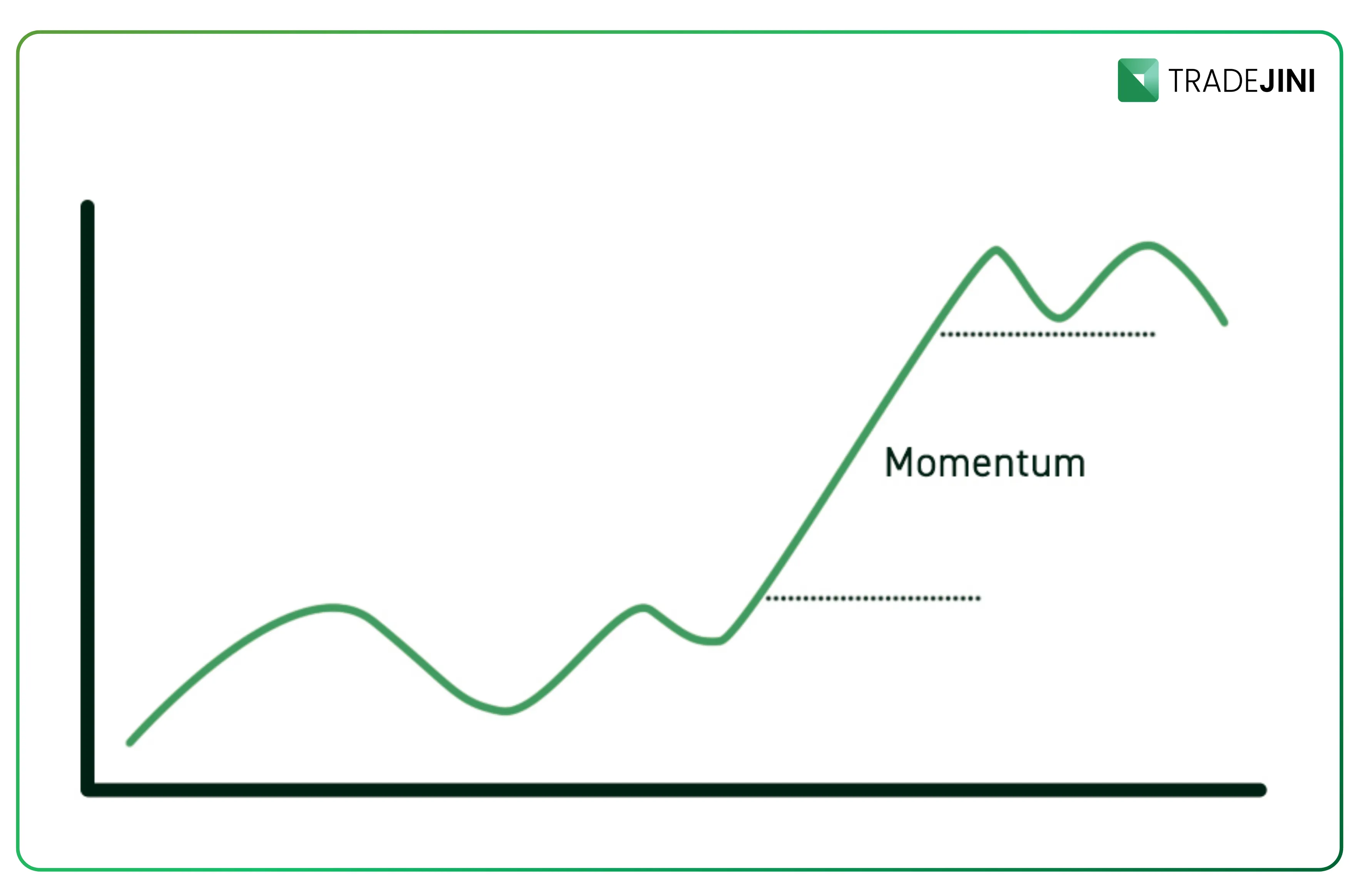
Momentum Trading and Market Trends
Momentum trading is built on the underlying principle that assets showing positive momentum tend to continue in the same direction for some time. Momentum traders seek stocks with strong price movement, high trading volume, and sustained price movements.
Momentum traders aim to capture short-term price trends as well as broader market trends. Whether it is bullish momentum during sector rallies or negative momentum during corrections, traders focus on upward or downward momentum supported by market sentiment and broader market participation.
In India, market fluctuations are common around RBI meetings, Union Budgets, and global events. Momentum fades quickly when market conditions shift, which is why risk management becomes central to successful momentum trading.
Momentum Trading Strategies and Technical Analysis
Most momentum trading strategies rely on technical analysis techniques and technical indicators. Popular momentum indicators include:
- Relative Strength Index
- Relative Strength Index RSI
- Moving Average Convergence Divergence
- Average Convergence Divergence
- Moving averages
- Signal line crossovers
The moving average convergence divergence indicator, also known as average convergence divergence, helps traders identify strong momentum, weakening momentum, and slowing momentum through its signal line and histogram behaviour.
Technical analysis tools help identify assets showing strong price trends and rising trading volume, while fundamental analysis evaluates the company’s underlying business strength. While breakout trading setups often signal strong price movement, traders must confirm strength through high trading volume and supportive price movements.
Momentum trading involves aligning entry and exit points with stock’s momentum rather than predicting exact tops or bottoms.
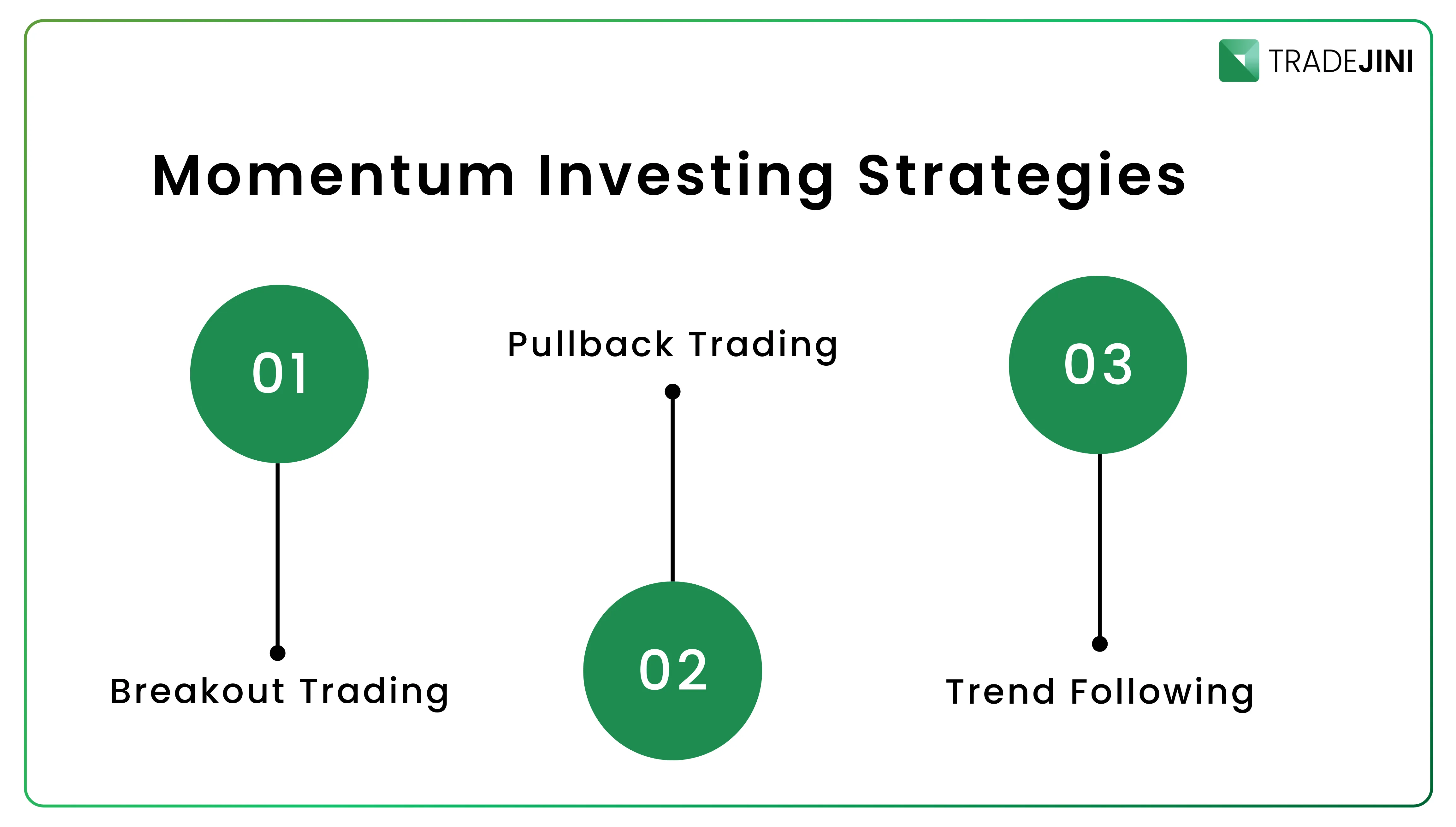
Breakout Trading and Identifying Stocks
Breakout trading is one of the most common momentum strategies. When the current market price crosses a key resistance level with strong volume, it signals that the market recognizes a change in price trends.
Momentum traders seek stocks experiencing significant price movements supported by broader market participation. However, if resistance sits too close to entry levels, the risk-reward may not justify the trading strategy.
Identifying stocks with strong upward momentum or strong underlying fundamentals increases the probability of profitable trades, but it does not eliminate inherent risks.
Position Sizing and Risk Management
Risk management is what allows momentum trading to work over time.
Momentum traders aim to risk a fixed percentage of capital per trade. Whether you are engaged in short term momentum trading or are among longer term momentum traders, controlling position size prevents large drawdowns during market volatility.
For example, if you risk 2 percent of capital and calculate share quantity based on stop distance from the current market price, you maintain consistency across asset classes. This approach supports informed trading decisions and reduces emotional reactions.
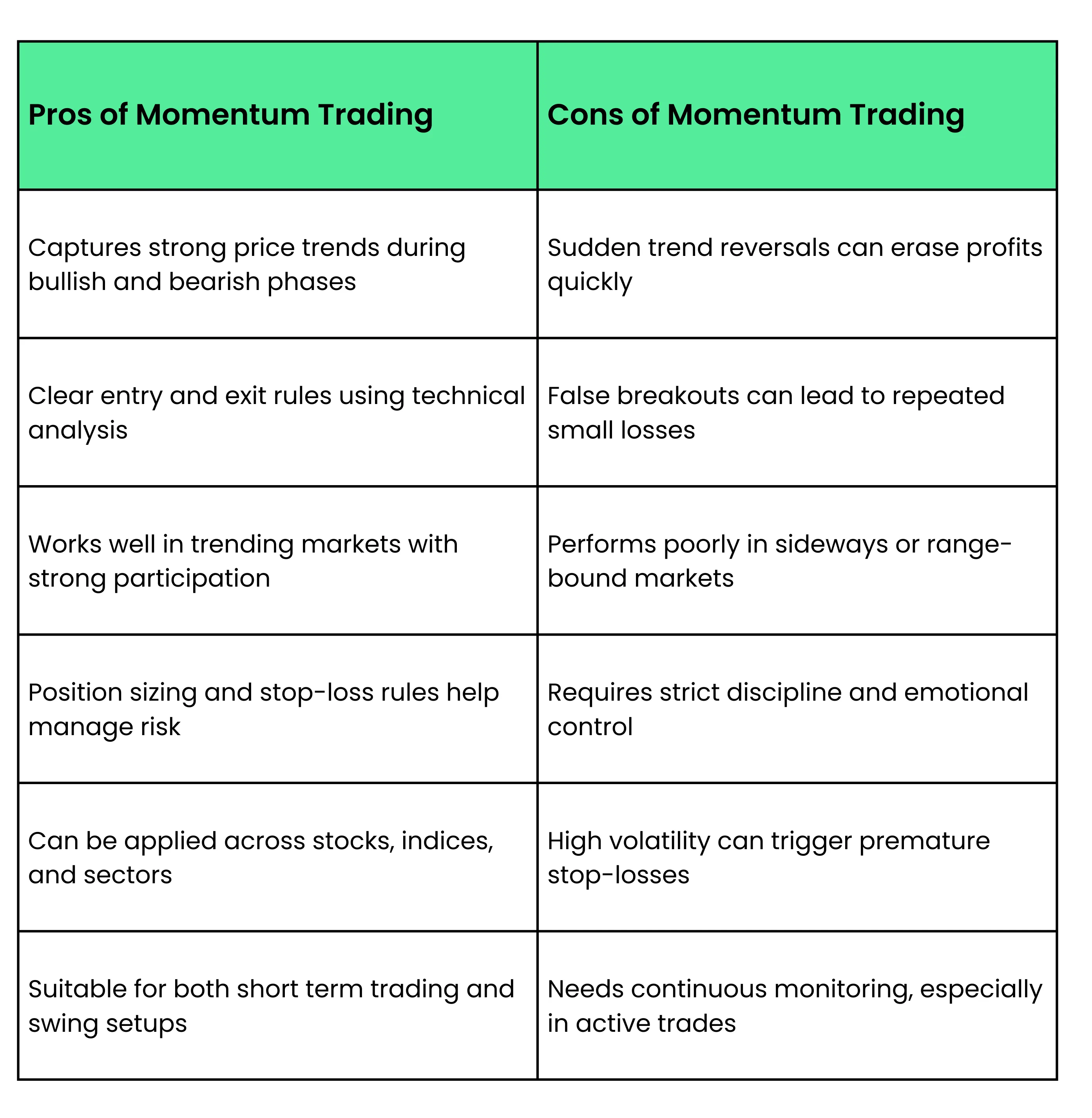
Momentum investing and term momentum trading both require strict discipline. Sudden trend reversals and weakening momentum can quickly turn profitable trades into losses if exit points are not respected.
Trailing stops help protect gains when sustained price movements continue in the same direction. Once momentum fades or a downward trend begins, disciplined exits preserve capital.
Market Volatility and Drawdowns
Indian financial markets frequently experience sharp market fluctuations. Whether due to global tightening cycles, domestic policy changes, or geopolitical events, price movements can be swift.
Can momentum trading survive such conditions? Yes, but only if traders focus on risk control. Can momentum trading work during sideways phases? It becomes harder, because breakouts fail more often and strong momentum is rare.
If facing consecutive losses, experienced traders reduce position size rather than increase exposure. Protecting capital ensures participation when broader market trends return.
Also Read: Clean Max Enviro Energy Solutions IPO – India’s Largest Commercial Renewable Energy Provider
Momentum Investing vs Short Term Momentum Trading
Momentum investing generally looks at longer time frames and broader existing trends across asset classes. Short term momentum trading focuses on short term price trends and quick entry and exit points.
Both approaches rely on technical analysis and technical analysis tools. However, some traders combine momentum strategies with fundamental analysis to confirm strong underlying fundamentals before committing capital.
The combination of technical indicators and fundamental analysis can improve probability, but no investment strategy removes inherent risks.
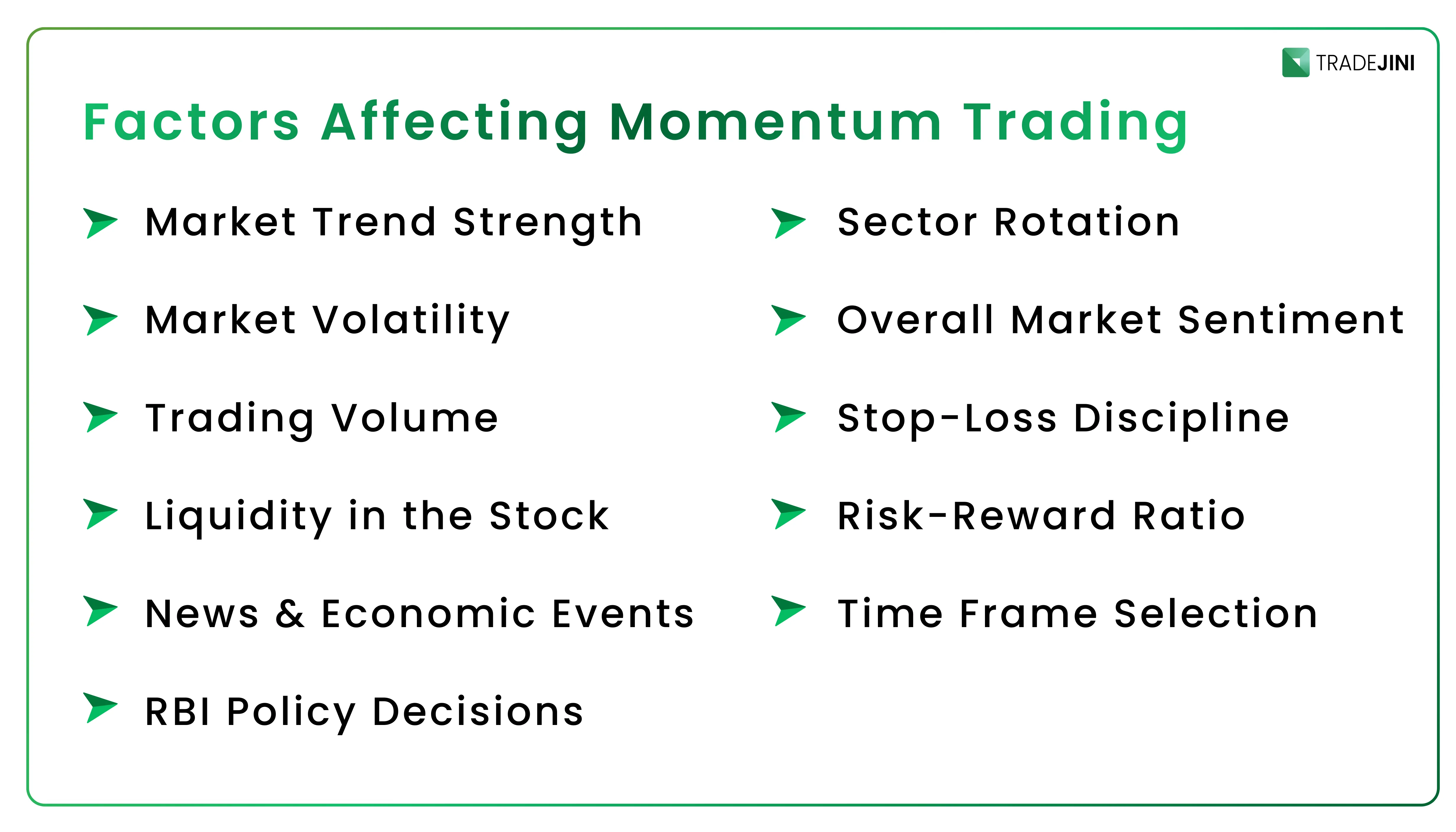
Risk-Reward and Exit Discipline
Before entering any trade, traders aim to ensure favourable risk-reward. A minimum 1:2 ratio is generally reasonable. If the potential upside does not justify the stop distance, skip the setup.
Successful momentum trading is not about predicting market sentiment. It is about reacting to upward or downward shifts in stock’s momentum. When strong price movement slows or negative momentum builds, exit points must be honoured.
Momentum traders seek consistency, not perfection.
Conclusion Momentum Trading
Conclusion momentum trading success depends less on prediction and more on disciplined execution.
Momentum trading can be a profitable strategy in Indian financial markets when traders focus on:
- Strong momentum supported by high trading volume
- Clear entry and exit points
- Consistent position sizing
- Strict risk management
- Awareness of broader market and market conditions
Momentum traders seek opportunities in significant price movements, but they must respect sudden trend reversals and market volatility.
Ultimately, momentum trading work depends on whether traders follow rules during both bullish momentum and downward momentum phases. The market will always offer opportunities. Only disciplined execution converts them into profitable trades.
Start your smart investing on CubePlus and take control of your financial goals.
Disclaimer: The information provided in our blogs is for informational purposes only and should not be construed as financial, investment, or trading advice. Trading and investing in the securities market carries risk. Always conduct your own research and consult with a qualified financial advisor before making any investment decisions. Past performance is not indicative of future results. Copyrighted and original content for your trading and investing needs.
© 2026 — Tradejini. All Rights Reserved.