Every day, unsuspecting investors lose millions of rupees to one of the oldest forms of securities fraud in financial markets. Pump and dump schemes have evolved from traditional boiler room operations to sophisticated social media campaigns, but their core objective remains unchanged: to manipulate stock prices for illegal profits while leaving other investors holding worthless assets.
These fraudulent schemes target everyone from novice traders to experienced investors, often focusing on penny stocks and microcap companies where limited oversight makes manipulation easier. Understanding how these scams operate, recognizing their warning signs, and knowing how to protect yourself can save you from significant losses and help preserve your financial future.
In this comprehensive guide, we’ll explore the mechanics behind pump and dump schemes, examine the various tactics fraudsters use, and provide you with the knowledge needed to identify and avoid these dangerous investment traps.
What Are Pump and Dump Schemes
A pump and dump scheme represents a form of securities fraud where perpetrators artificially inflate a security’s price through false or misleading statements, then sell their holdings at the inflated price before the inevitable crash. This coordinated manipulation leaves victims with devalued stocks while fraudsters profit from their dishonest sales practices.
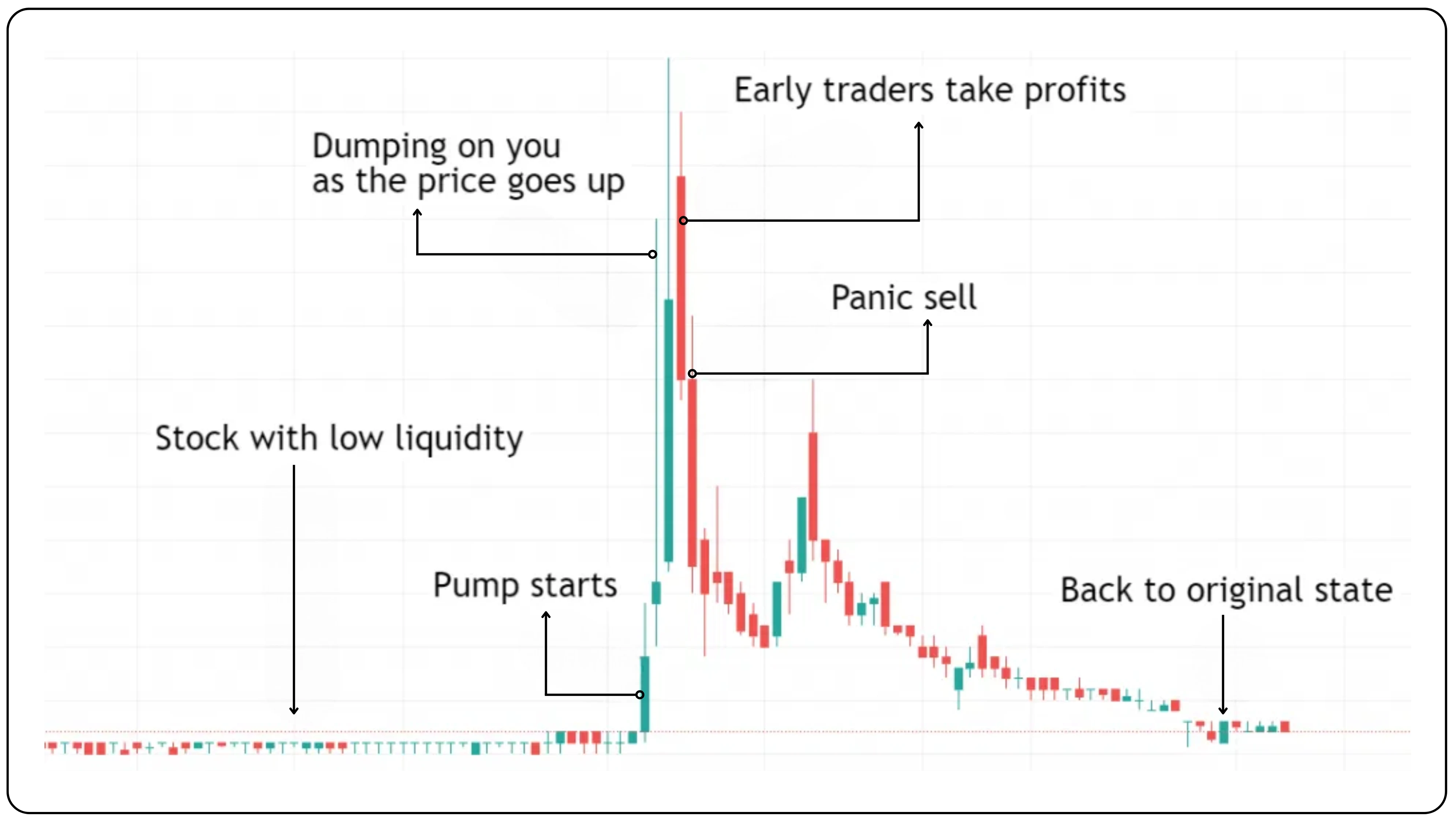
The basic mechanics follow a predictable pattern. Fraudsters first accumulate large positions in thinly traded stocks, typically targeting microcap stocks or small cap stocks with limited public information. They then launch promotional campaigns using false or misleading information to create artificial demand and drive up the stock price. Once enough other investors buy in and prices rise substantially, the perpetrators dump their shares at the elevated prices, causing the stock quickly to collapse and leaving late investors with significant losses.
This type of securities fraud has existed for decades, dating back to the early days of public stock trading. However, technology has dramatically expanded the reach and sophistication of these schemes. Where fraudsters once relied on cold calling from small brokerage firm operations, they now leverage social media platforms, email campaigns, and encrypted messaging to reach thousands of potential investors simultaneously.
The Securities and Exchange Board of India (SEBI) reports that majority of their enforcement actions involving microcap securities include elements of pump and dump manipulation. This statistic underscores how pervasive these schemes have become, particularly in markets with lower regulation and oversight.
How Pump and Dump Schemes Operate
Understanding the operational framework of pump and dump schemes reveals why certain stocks become targets and how fraudsters exploit market vulnerabilities. The selection process typically focuses on microcap companies with market capitalizations under ₹1000 crore.
These smaller companies often lack extensive analyst coverage, regular financial reporting, and significant institutional investor interest. This limited oversight creates an environment where misleading statements can go unchallenged long enough for fraudsters to execute their schemes. Additionally, the low trading volume characteristic of many penny stocks means that even modest buying pressure can create dramatic price increases.
The timeline of a typical pump and dump scheme unfolds in several distinct phases:
- Accumulation phase – Perpetrators quietly build substantial positions in their target company, often using multiple accounts to avoid detection.
- Promotion phase (the “pump”) – Fraudsters disseminate false or misleading statements through various channels, claiming insider knowledge of pending deals, regulatory approvals, or breakthrough products.
- Dump phase – Once buying pressure inflates the stock, they rapidly sell their holdings, causing the artificial demand to disappear and prices to plummet.
Traditional Methods
Historical pump and dump schemes relied heavily on direct investor contact through dishonest sales practices. Historical pump and dump schemes relied heavily on direct investor contact through dishonest sales practices. Boiler room operations employed aggressive telemarketers who made unsolicited calls to potential investors, promoting particular stock opportunities with high-pressure tactics and false claims about guaranteed returns.
These operations often involved small brokerage firm networks that acted as market makers while simultaneously promoting the stocks they held. Brokers received substantial commissions for pushing specific securities, creating powerful incentives to mislead clients about investment risks and potential returns.
Cold calling campaigns typically followed scripts designed to create urgency and prevent potential investors from conducting proper research. Callers claimed to have insider information about pending acquisitions, regulatory approvals (like FDA approvals for pharma stocks), or other catalysts that would drive stock prices higher. Some schemes even used “wrong number” tactics, where callers pretended to accidentally reach investors while discussing supposed insider tips with colleagues.
Print media also played a significant role in traditional pump and dump schemes. Fraudsters distributed newsletters, fax campaigns, and fake news releases that appeared to come from legitimate financial publications. These materials often included fabricated analyst reports, false company announcements, and misleading financial projections designed to generate buying interest.
Modern Digital Tactics
The internet and social media have revolutionized how pump and dump schemes operate, allowing fraudsters to reach global audiences instantly and at minimal cost. Social media platforms like Telegram, Twitter, Reddit, and Discord have become primary venues for promoting questionable investment opportunities to unsuspecting investors.
Email spam campaigns represent another common digital tactic, with fraudsters sending millions of messages promoting specific stocks to randomly selected recipients. These emails often claim to offer exclusive investment recommendations or insider information about companies poised for dramatic growth.
Online trading accounts enable the rapid execution that modern pump and dump schemes require. Fraudsters can accumulate and dump large positions within minutes using electronic trading platforms, making it difficult for regulators to detect and prevent the manipulation in real-time.
Encrypted messaging apps and private investment groups create seemingly exclusive environments where fraudsters can share “insider tips” with selected audiences. These platforms appeal to investors’ desire for exclusive information while providing fraudsters with targeted groups of potential victims.
Types of Pump and Dump Schemes
Different variations of pump and dump schemes exploit specific investor behaviors and market conditions. Understanding these variations helps investors recognize potential threats across various investment environments and platforms.
Classic Pump and Dump
The classic pump and dump scheme involves the systematic distribution of false or misleading information through multiple channels to create artificial demand for a particular stock. Perpetrators often coordinate their efforts across various platforms, amplifying their promotional messages to reach maximum audiences.
These schemes frequently rely on creating fake positive news about company prospects, partnerships, or breakthrough developments. Fraudsters may distribute press releases claiming that target companies have secured major contracts, received regulatory approvals, or developed revolutionary products. The goal is to create a compelling narrative that motivates investors to buy without conducting proper due diligence.
Stock promoters and paid advertising play crucial roles in classic pump and dump operations. Fraudsters often hire newsletter writers, bloggers, and social media influencers to promote their target stocks, though they rarely disclose these financial relationships to audiences. This creates an appearance of independent endorsement that can be particularly persuasive to potential investors.
Coordination among multiple fraudsters amplifies promotional efforts and creates the appearance of widespread market enthusiasm. By using multiple accounts and platforms, perpetrators can generate the illusion that numerous independent sources are recommending the same investment opportunity.
Boiler Room Operations
Boiler room operations represent one of the most notorious forms of pump and dump schemes, popularized by high-profile cases and depicted in films like “The Wolf of Wall Street.” These operations typically involve small brokerage firm environments where aggressive salespeople use high-pressure tactics to sell questionable securities to potential investors.
The term “boiler room” refers to the high-stress, high-volume sales environment where brokers work in cramped conditions, making hundreds of cold calls daily to promote specific stocks. These operations often target retirees, inexperienced investors, and others who may be more susceptible to aggressive sales tactics.
Broker incentives in boiler room operations create powerful motivations for deceptive practices. Sales representatives typically receive substantial commissions for selling promoted stocks, regardless of whether these investments are suitable for clients. This compensation structure encourages brokers to prioritize their own profits over client welfare.
Small brokerage firm operations often act as market makers for the stocks they promote, creating additional conflicts of interest. By controlling both the supply and demand sides of the market, these firms can manipulate prices more effectively while generating profits from both trading commissions and their own stock holdings.
Cryptocurrency Pump and Dumps
The emergence of cryptocurrency markets has created new opportunities for pump and dump schemes, with research identifying over 3,400 coordinated crypto pump campaigns in just a six-month period. The largely unregulated nature of cryptocurrency markets, combined with the ease of creating new tokens and the anonymity of blockchain transactions, makes digital assets particularly vulnerable to manipulation.
Telegram and Discord groups have become primary venues for organizing cryptocurrency pump and dump schemes. These platforms allow fraudsters to coordinate buying campaigns among hundreds or thousands of participants, creating massive demand spikes that can drive prices up by hundreds of percentage points within minutes.
The schemes typically target new or low-volume cryptocurrencies trading on smaller exchanges where limited liquidity makes price manipulation easier. Fraudsters often focus on tokens with small market capitalizations that can be moved dramatically with relatively modest buying pressure.
Securities and Exchange Board of India (SEBI) and Reserve Bank of India (RBI) have issued numerous warnings about unregulated crypto markets enabling fraud. Unlike traditional securities markets, many cryptocurrency exchanges operate with minimal oversight, making it difficult for authorities to detect and prevent manipulation in real-time.
Want to decode stocks and key ratios? Click here to start.
Warning Signs and Red Flags
Recognizing the warning signs of pump and dump schemes can protect investors from falling victim to these fraudulent operations. Several common patterns and tactics appear consistently across different types of schemes, regardless of the specific assets or platforms involved.

Unsolicited investment offers via email, social media, or cold calls represent one of the most reliable indicators of potential fraud. Legitimate investment opportunities rarely require aggressive marketing to random audiences, and professional investment advisers typically work with existing clients rather than pursuing cold prospects.
Promises of guaranteed returns or claims of insider information should trigger immediate skepticism. No legitimate investment can guarantee profits, and true insider information would be illegal to use for trading purposes. Fraudsters often claim to have exclusive knowledge about pending announcements, regulatory approvals, or business developments that will drive stock prices higher.
High-pressure tactics demanding immediate action before opportunities disappear represent another common red flag. Fraudsters create artificial urgency to prevent potential victims from conducting proper research or seeking independent advice. Legitimate investment opportunities don’t typically require split-second decisions or immediate money transfers.
The lack of available information about company financials or business operations should concern any potential investor. Pump and dump schemes often target microcap companies with limited public disclosure requirements, making it difficult for investors to verify promotional claims or assess actual business prospects.
Affinity fraud targeting specific religious, ethnic, or professional groups exploits trust relationships to spread investment scams. Fraudsters often gain credibility by first establishing relationships within targeted communities before introducing investment opportunities to potential victims.
Too-good-to-be-true investment claims and unrealistic profit projections violate basic investment principles. While all investments carry risks, pump and dump promoters typically promise extraordinary returns with minimal risk, appealing to investors’ desires for easy money.
How to Protect Yourself from Pump and Dump Schemes
Protecting yourself from pump and dump schemes requires a combination of skepticism, research skills, and understanding of legitimate investment principles. The Securities and Exchange Board of India (SEBI) provides specific recommendations for avoiding investment fraud and protecting your assets from fraudulent schemes.

Research and Due Diligence
Thorough research represents your best defense against pump and dump schemes. Before making any investment, verify company information through official SEBI filings and other authoritative sources. Public companies must file regular reports with the Securities and Exchange Board of India, and these documents provide objective information about business operations, financial performance, and risk factors.
Checking the background of promoters and investment advisers can reveal disciplinary history, registration status, and other relevant information. Legitimate investment professionals maintain proper licenses and regulatory compliance, while fraudsters often operate without required registrations or have histories of regulatory violations.
Understanding a company’s business model, revenue sources, and competitive position requires careful analysis of available information. Pump and dump targets often have questionable business models, minimal revenues, or unclear competitive advantages. Conducting your own research helps you identify these red flags before committing money to potentially fraudulent investments.
Analyzing trading volume patterns and price history can reveal signs of manipulation. Pump and dump schemes typically create unusual trading patterns, with sudden spikes in volume and price that lack fundamental justification. Historical price charts can show whether current promotional activities represent isolated events or part of ongoing manipulation patterns.
Avoiding Unsolicited Offers
Maintaining healthy skepticism toward unsolicited investment offers protects you from becoming a target of fraudulent schemes. Ignore investment tips from unknown sources on social media, particularly those promoting specific stocks with claims of insider knowledge or guaranteed returns.
Exercise caution when evaluating “hot tips” from online forums and chat groups. While these platforms can provide valuable investment insights, they also serve as venues for promoting pump and dump schemes. Anonymous online recommendations should never substitute for independent research and professional advice.
Verify the legitimacy of any investment recommendations before acting on them. Research the background of people providing advice, check whether they have financial interests in promoted investments, and seek independent confirmation of any claims about company prospects or business developments.
Understanding that legitimate investment opportunities rarely require immediate action helps you avoid high-pressure tactics. Professional investment advisers typically encourage clients to take time for consideration and research, while fraudsters create artificial urgency to prevent due diligence.
Want to own shares of top American companies? Click here to learn the easiest way to start investing in US stocks through Tradejini INX GA.
Real-World Impact and Notable Cases
The financial impact of pump and dump schemes extends far beyond individual losses, affecting market confidence and investor participation in legitimate opportunities. Major cases have resulted in hundreds of millions of dollars in investor losses while generating substantial profits for fraudsters through systematic market manipulation.
Historical cases like those associated with Harshad Mehta and other boiler room operations demonstrate the extensive damage these schemes can cause. The “Harshad Mehta Scam of 1992” which stands as one of the largest financial frauds in the country’s history, defrauded investors of approximately ₹5000 crore through aggressive manipulation of the stock market through high-pressure tactics and misleading information to inflate stock prices artificially.
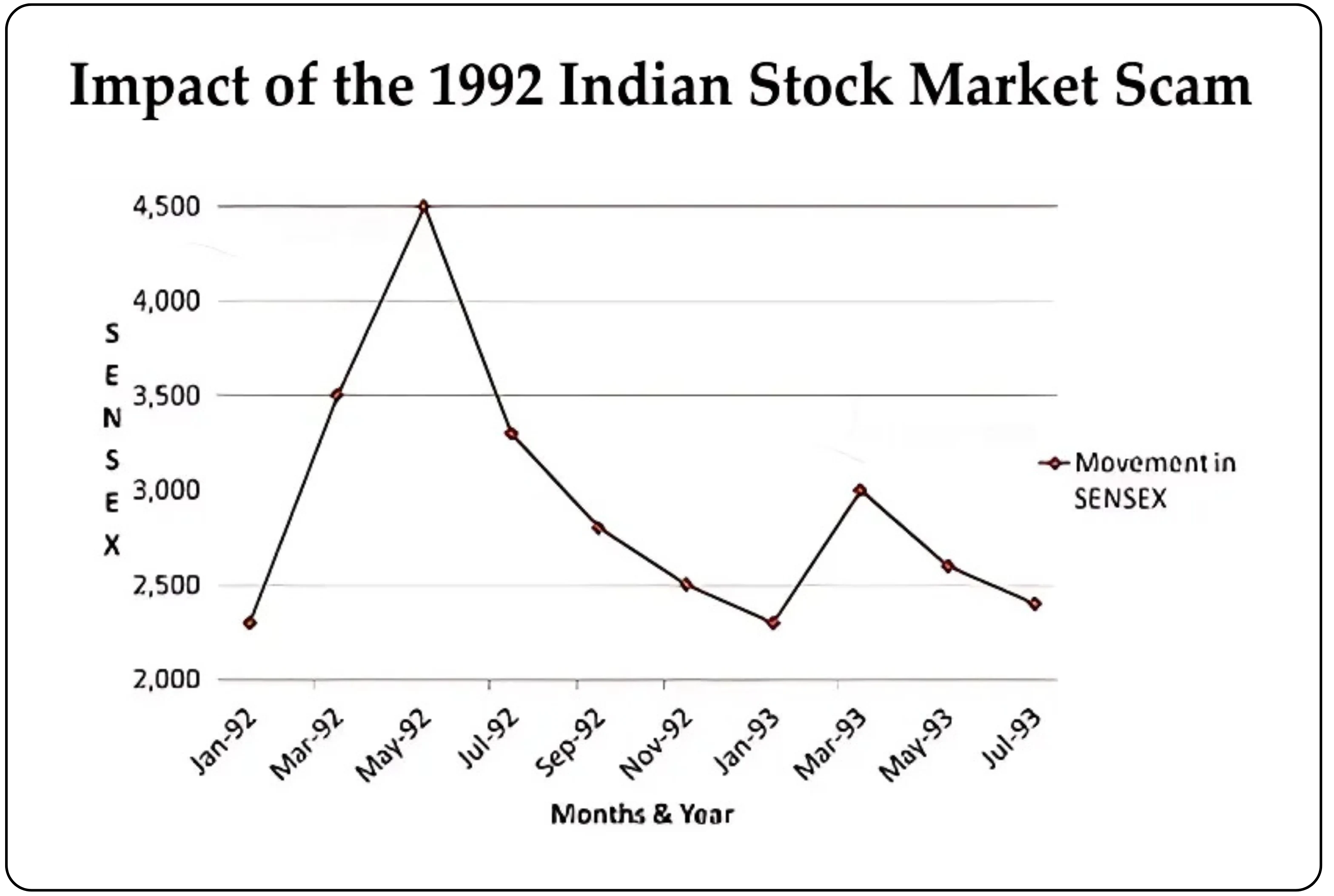
BSE Sensex chart during 1992 crash
More recent cryptocurrency cases illustrate how digital assets have become new targets for pump and dump schemes. The Squid Game token, promoted through social media based on the popular Netflix series, saw its price spike to over $2,800 before crashing to near zero when developers executed a “rug pull” and disappeared with investor funds.
The Securities and Exchange Board of India (SEBI) has increased enforcement efforts, bringing hundreds of cases against individuals and organizations involved in pump and dump schemes. These actions have resulted in substantial fines, asset forfeitures, and criminal prosecutions, though many victims never recover their losses.
Whistleblower rewards programs provide financial incentives for reporting pump and dump schemes and other securities violations. SEBI’s whistleblower framework, offers monetary rewards to informants if their information results in penalties or disgorgements of ₹5 crore or more. The reward can be up to 10% of the recovered amount, capped at ₹1 crore. SEBI ensures confidentiality for whistleblowers and protects them from retaliation within their organizations. Recognizing the importance of a strong whistleblower mechanism, SEBI raised the maximum reward for insider trading reports from ₹1 crore to ₹10 crore in 2021, demonstrating its commitment to empower whistleblowers who play a crucial role in maintaining market integrity.
Legal Consequences and Enforcement
Pump and dump schemes violate multiple securities laws and can result in severe criminal penalties including substantial fines and imprisonment. Under the SEBI Act, 1992, and the Prohibition of Fraudulent and Unfair Trade Practices (PFUTP) Regulations, 2003, SEBI has the authority to impose strict penalties, including hefty fines, disgorgement of unlawful gains, and market bans on individuals and entities involved in such fraudulent activities.
Criminal penalties for securities fraud can involve imprisonment as well as fines, reflecting the serious harm these schemes cause to investors and the integrity of financial markets. For instance, SEBI’s recent crackdown on the Sadhna Broadcast Limited pump and dump case resulted in bans on 59 entities for periods ranging from one to five years and fines up to ₹5 crore each. SEBI ordered disgorgement of illegal gains amounting to ₹58 crore with interest, underscoring the regulator’s commitment to restitution and deterrence.

Between FY 2020-21 and FY 2024-25, SEBI recorded 154 complaints regarding pump and dump schemes, especially prevalent in microcap and small-cap stocks, often trading with low liquidity and limited public information. During this period, SEBI levied penalties totaling ₹1,860 crore and directed the recovery of ₹452 crore in illegal profits. These enforcement actions have included fines, suspensions, disgorgements, and permanent bans to uphold market integrity and protect retail investors.
SEBI also actively encourages reporting of suspected market manipulation via online complaint systems and investor awareness programs, helping streamline intelligence for timely investigations. Regulatory measures include extensive market surveillance, issuance of cautionary messages, and collaboration with stock exchanges and depositories to detect abnormal price movements.
Regulatory enforcement in India mirrors global principles: pump and dump schemes attract severe civil and criminal penalties to safeguard investors and ensure market fairness. However, the best protection remains avoiding these schemes entirely through proper research, skepticism toward promotional materials, and adherence to fundamental investment principles.
Understanding pump and dump schemes, recognizing their warning signs, and maintaining proper skepticism toward investment promotions provides your best defense against these pervasive forms of securities fraud. By conducting thorough research, avoiding unsolicited offers, and reporting suspicious activities, you can protect your money while contributing to market integrity and investor protection efforts.
Ready to invest smarter? CubePlus is your gateway to better trading.[Sign up now]
Disclaimer: The information provided in our blogs is for informational purposes only and should not be construed as financial, investment, or trading advice. Trading and investing in the securities market carries risk. Always conduct your own research and consult with a qualified financial advisor before making any investment decisions. Past performance is not indicative of future results. Copyrighted and original content for your trading and investing needs.
© 2025 — Tradejini. All Rights Reserved.
.webp%3Falt%3Dmedia%26token%3D0ead9799-20bc-4d1e-ae8f-d75ab18921b5&w=3840&q=75)